Amsterdam is home to some very interesting museums. Whether it’s museums housing works of art by some of the best painters in history or museums about the naval history of the Netherlands, there is something for people with different interests. At the heart of the bustling city centre in the Red Light District area is one of the oldest museums in the city: Museum Ons’ Lieve Heer op Solder. This is the museum where visitors experience the Dutch Golden Age in a special way; a beautiful and unique 17th-century house with a church in the attic. No less than 350 years ago, Jan Hartman bought the building on Oudezijds Voorburgwal together with the two adjacent buildings on Heintje Hoekssteeg. He converted the attic floors of the three houses into a Catholic church entirely in accordance with the then prevailing rules; nothing on the outside suggested that it was a church.


Museum Ons’ Lieve Heer Op Solder
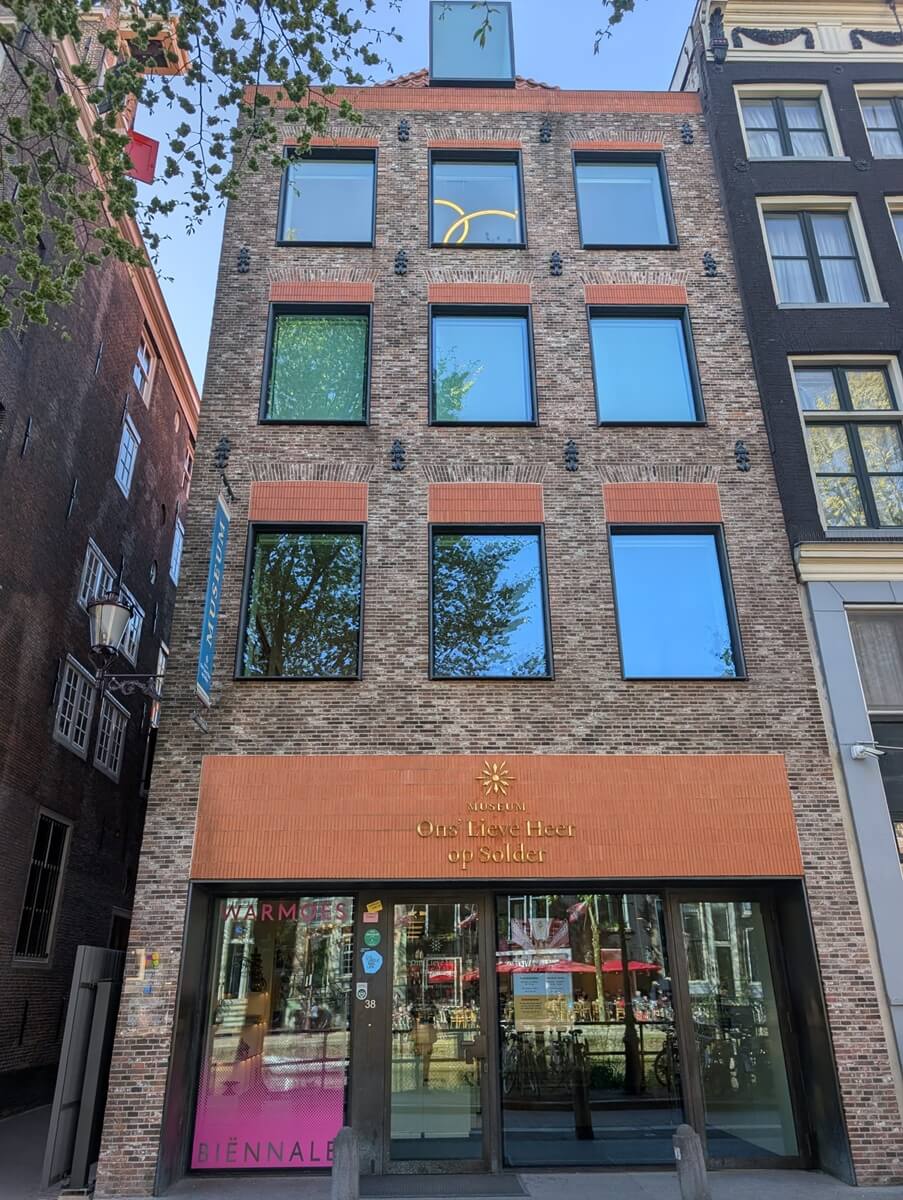
A Catholic Church in the Attic of a 17th-Century House
To ensure the preservation of the monument, all living spaces, stairs and the beautiful attic church had to be restored. As a visitor, you experience what the house church looked like when it was used as a Catholic church. Color, light and decoration exude the atmosphere of the period in which the last masses took place in the attic church at the end of the 19th century. The clandestine churches were of great importance during this period because they marked the beginning of religious tolerance. A free audio tour tells the stories of the different periods in the house. The museum has a new entrance building with a shop and a cosy café. This way you can enjoy a drink and a snack after the walk.
Museum Ons’ Lieve Heer op Solder For Children
Ons Lieve Heer op Solder also has a couple of activities for children from 5 to 10 years old. Little children can go on a quest or a scavenger hunt in search of the ‘Lieveheerbeestje op Solder’. This is available for only 1 euro at the reception. For children from 10 to 12 years old, there is a free audio tour “Feest! op Solder” or “Party! On Solder” in English. During this audio tour, the children learn more about the origins of Christian holidays, such as Sinterklaas, Christmas, Easter and Pentecost.
History of the Museum Ons’ Lieve Heer op Solder
The corner building on the Oudezijds Voorburgwal dates from around 1630 but was radically rebuilt in 1661 – 1663 by the new owner, the Roman Catholic stockbroker Jan Hartman, whose son Cornelis studied as a priest. Amsterdam had just been retaken by Protestants led by William of Orange from the Spanish Catholics who ruled over the Dutch Republic. Although the new Dutch Republic was a Protestant government, they agreed that everyone should be allowed the freedom of conscience. It meant that people of all faiths were allowed to worship anyhow they saw fit as long as they kept it within closed doors. This tolerance also contributed to the prosperity of Amsterdam in the 16th century as lots of merchants flocked to the city with their businesses which further strengthened the economy. One of these merchants was Jan Hartman, a Catholic faithful. Since Catholics and people of other faiths were allowed to practice their faith behind closed doors, a lot of house churches started to spring up in Amsterdam. Jan Hartman bought the building on the Oudezijds, established the stocking shop in the front house and a beautiful reception room on the main floor of the back house. In the attic, he set up a house church which was arranged over two back houses in the alley. It is the only one of the formerly numerous Amsterdam attic churches that have been preserved in almost their original state. The successive owners continue to rent the church, even if they themselves were Protestants, to Roman Catholic clergy.
The church was referred to as the Deer (after the coat of arms of Hartman) or also called Het Haantje (a corruption of Heintje, of the Heintje Hoekssteeg). The current name Ons ’Lieve Heer op Solder dates from the nineteenth century. The house church was dedicated to St. Nicholas, who until the Alteration of 1578 (when the city government was taken over by Calvinists) had been the patron saint of the Oude Kerk and of the city of Amsterdam. In 1887, the Sint Nicolaaskerk on the Prins Hendrikkade was opened, the third consecutive church dedicated to Sint Nicolaas. The house church had now lost its function and threatened to disappear. Thanks to the Amstelkring association, consisting of Roman Catholic Amsterdammers, the building with the house church was saved and in 1888 furnished as the Roman Catholic Museum in Amsterdam, now the Amstelkring Museum. The museum gives a picture of a rich merchant’s house with a Roman Catholic house church that was decorated on the upper floors.
The 17th-Century House
The original layout of a seventeenth-century residence with the church above is particularly well preserved. The complex consists of a front house and two original rear houses, each with an entrance on the Heintje Hoekssteeg. In the eighteenth century, the neck gable made way for the current spout façade, the wooden lower part with windows for a stone lower part. The entrance, accessible via a sidewalk, gives access to the front house. The front room was originally used as a retail space, but in 1770 it was converted into a living room. The marble fireplace in Louis XV style dates from that time, with the characteristic asymmetrical shell in the middle. The original interior fireplace, behind the retail space, still has a beamed ceiling from around 1630.
The room on the first floor is a high room that covered two original floors. It was initially given a sophisticated, classic seventeenth-century design with the fireplace as an eye-catcher. The oak fireplace rests on white-veined black marble pilasters and helical columns. The chimneypiece is a Dutch copy of the “Presentation in the Temple” by the Venetian painter Andrea Schiavone.
The Church in the Attic
The house church covers three floors and extends over both back houses. Catholic churchgoers could reach the church through an entrance on the Heintje Hoeksteeg. From there a spiral staircase led up. There was also a private entrance from the house, a stairway dating from the seventeenth century. Halfway up the stairs was a built-in bedroom in front of the curate.
By creating large openings in two successive beams, a high church space has been created with two galleries. The galleries are interconnected by iron tie rods which in turn are attached to rods attached to the hood. Because the house is on the corner of the Heintje Hoekssteeg, the narrow church space receives light not only through the facade but also through the side wall.
The current baroque interior is largely eighteenth-century. The visual centre of the room is the richly executed altar from around 1715 that is framed by marble columns and stucco. The altarpiece with the “Baptism in the Jordan”, painted by Jacob de Wit in 1736, forms thematically a unity with the stucco above it where God the Father and the Holy Spirit are depicted, surrounded by clouds and cherubim. The painting could be exchanged for other representations in accordance with the liturgical celebrations of the church year, Christmas, Easter and Pentecost. Due to the limited space, the mahogany pulpit could be ingeniously turned away in one of the pillars of the altar. To the left of the main altar, in the second annexe, is the side altar dedicated to Mary, the mother of Jesus Christ. The organ opposite the main altar was made especially for this room in 1794. The organ builder was Hendrik Meyer who applied his monogram to the back of the organ. The bellows are located in a cupboard in the corner from where a wooden tube led the air to the organ.
Museum Café
The museum café is on the first floor. In this open, brightly lit room, visitors can enjoy a cup of coffee or tea with a delicious piece of cake, a delicious lunch or a special beer from the Prael brewery. The wall-wide curtain is a design by Theo Tienhooven. This wall curtain is based on the authentic colours found in the historic building and brought back during the restoration. The café is easily accessible by stairs and an elevator. Entrance to the museum café is only possible with a museum ticket. The museum café is open from 10:30 AM to 5:00 PM and on Sunday from 1:00 PM to 5:30 PM.
Museum Shop
The museum shop is located on the ground floor and offers a wide range of books, gifts and souvenirs. The store is easily accessible. Among other things, the publication Ons ’Lieve Heer op Solder is available in the museum shop. It’s the perfect place to shop for your unique souvenirs.
La nostra impressione fotografica di Ons Lieve Heer Op Solder
Abbiamo visitato il Museum Ons Lieve Heer Op Solder e scattato alcune foto. Il museo è stato molto interessante e c’era così tanto da imparare. Non c’era coda e il personale è stato molto disponibile. Consigliamo vivamente questo museo. Dai un’occhiata ad alcune delle nostre foto per una prima impressione del museo.

Una volta superata la biglietteria, devi scendere al piano di sotto per rilassarti e guardare il video introduttivo. Qui ti viene spiegato perché il museo ha il nome Ons Lieve Heer op Solder e cosa significa. Ti viene anche data una breve storia di Amsterdam e di come questa storia abbia influenzato il nome del museo.

Dopo una breve storia del museo, verrai condotto al piano superiore per vedere il museo proprio come era nel XVI secolo. Ecco una sala riunioni del XVI secolo (probabilmente per il sacerdote e altri leader della chiesa) nel museo.

Un camino del XVI secolo nel Museum Ons Lieve Heer op Solder Amsterdam.

Ecco una collezione di piatti in ceramica del XVI secolo nel Museum Ons Lieve Heer op Solder Amsterdam. Questi piatti sono stati trovati sotto il museo durante lo scavo di un sistema fognario.

Ecco una chiesa del XVI secolo nel Museum Ons Lieve Heer op Solder Amsterdam. È stata ricostruita esattamente come era nel XVI secolo. C’è una spiegazione dettagliata di come è stata costruita la chiesa e di quanto fosse importante per i cattolici nel XVI secolo.

Ecco una cucina del XVI secolo nel Museum Ons Lieve Heer op Solder Amsterdam.

Petrus Parmentier fu il primo sacerdote inviato a capo della chiesa domestica di Amsterdam. Fu il sacerdote che guidò la messa ogni giorno nella chiesa Ons Lieve Heer op Solder.

Uno dei pilastri della Chiesa cattolica è la confessione. Ecco un confessionale del XVI secolo nel Museum Ons Lieve Heer op Solder Amsterdam.

L’altare della chiesa nel Museum Ons Lieve Heer op Solder Amsterdam.
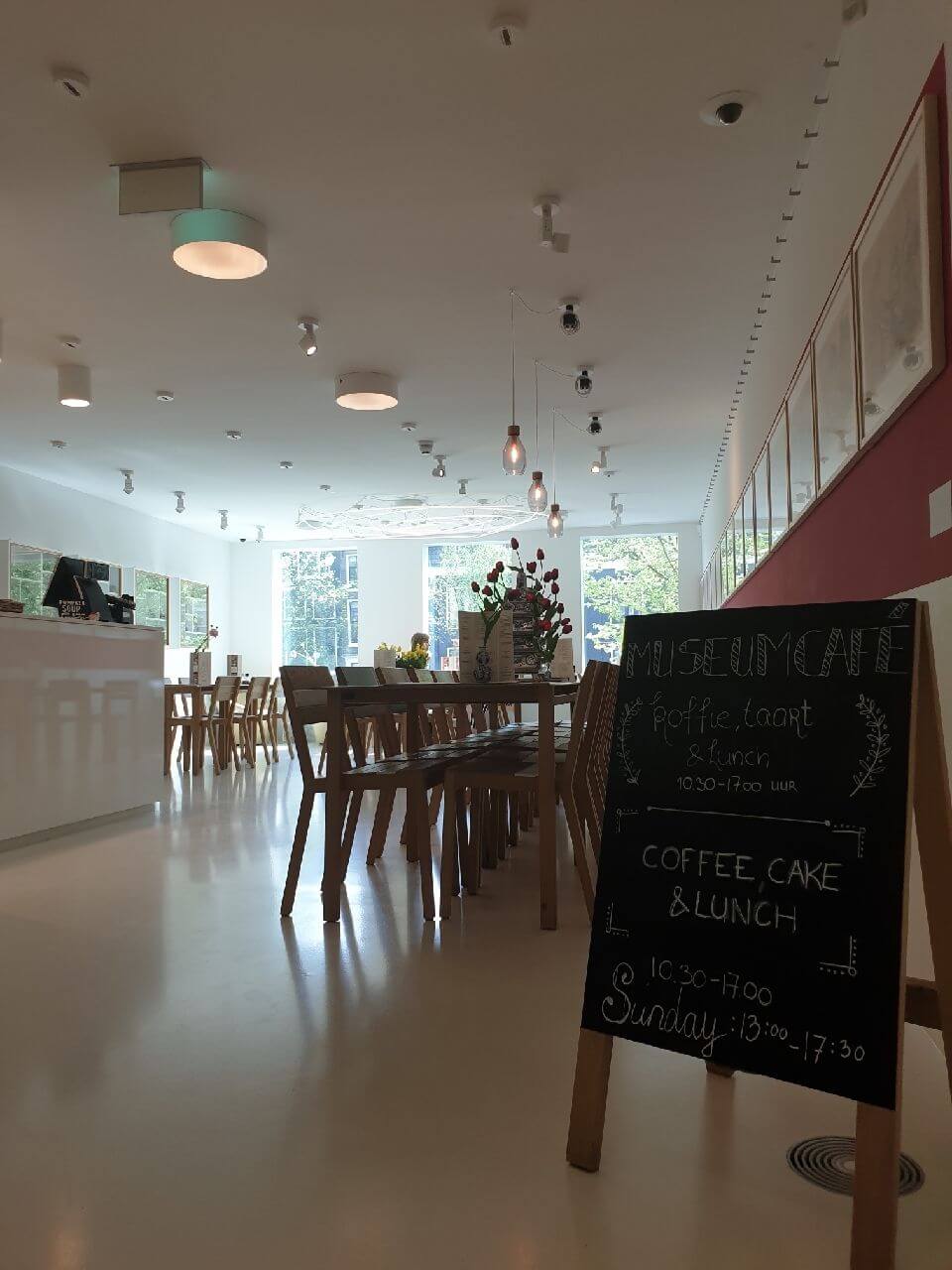
Quando hai finito il tour del museo, non dimenticare di rilassarti per una tazza di caffè nel caffè del Museum Ons Lieve Heer op Solder Amsterdam.
Orari di apertura Ons Lieve Heer Op Solder Amsterdam
Il Museum Ons’ Lieve Heer op Solder è aperto tutti i giorni. La biglietteria chiude alle 17:45.
| Lunedì – Sabato | 10:00 – 18:00 || Domenica – 13:00 – 18:00 |
| Giorno del Re – 27 aprile Natale – 25 dicembre |
Chiuso |
Prezzi dei biglietti Museum Ons Lieve Heer Op Solder
I biglietti sono disponibili all’ingresso del Museum Ons Lieve Heer Op Solder. A causa della capacità limitata del museo, i gruppi sono tenuti a registrarsi in anticipo. Un’audioguida è inclusa nel prezzo d’ingresso ed è disponibile in olandese, inglese, francese, tedesco e spagnolo. Una visita guidata può essere organizzata su richiesta ed è disponibile anche in olandese, inglese, francese e tedesco.
Nota: I gruppi sono pregati di registrarsi in anticipo tramite l’ufficio prenotazioni chiamando il numero +3120 523 17 20 (dal lunedì al venerdì, dalle 13:00 alle 17:00) o inviando un’e-mail a [email protected].
Prezzi d’ingresso regolari alla porta
| Adulti | 16,95 € |
| Bambini 5 – 17 | 7,50 € |
| Bambini 0 – 4 | Gratis |
| Iamsterdam card | Gratis |

Indirizzo, informazioni di contatto e come arrivare al museo
Il Museum Ons’ Lieve Heer op Solder è facilmente raggiungibile con i mezzi pubblici. Il museo si trova a circa cinque minuti a piedi dalla Stazione Centrale di Amsterdam e dalla stazione della metropolitana Nieuwmarkt. Con i tram 4, 14 e 24 i visitatori possono scendere in Piazza Dam, da dove dista sempre cinque minuti a piedi. Se vieni in auto, puoi parcheggiare nel parcheggio multipiano del Bijenkorf (Dam) o nel parcheggio della Stazione Centrale di Amsterdam. 020 624 66 04
Indirizzo
Museum Ons Lieve Heer Op Solder
Voorburgwal 38 – 40
1012 GD Amsterdam
+31 (0)20 624 6604
[email protected]
https://www.opsolder.nl/en
Museum Ons Lieve Heer Op Solder Amsterdam on the city map
Mezzi pubblici per il museo
Puoi raggiungere il museo da molte zone di Amsterdam. Uno dei modi più semplici è passare dalla Stazione Centrale di Amsterdam o da Leidseplein. Puoi prendere il tram o la metropolitana. I seguenti tram e metropolitane ti porteranno al museo:
Dalla Stazione Centrale di Amsterdam:
-
-
- Tram 4, direzione Amstelstation – Fermata Piazza Dam
- Tram 14, direzione Flevorpark – Fermata Piazza Dam
- Tram 24, direzione VU Medisch Centrum – Fermata Piazza Dam
-
Dalla Stazione Centrale di Amsterdam in metropolitana:
-
-
- Metropolitana 51, direzione Isolatorweg – Fermata Nieuwmarkt
- Metropolitana 53, direzione Gaasperplas – Fermata Nieuwmarkt
-
Da Amsterdam Leidseplein:
Tram 2 o 12, direzione Stazione Centrale di Amsterdam, fermata Piazza Dam
Con il widget qui sotto puoi trovare consigli precisi per i tempi di viaggio in tempo reale in base alla tua posizione attuale. Questa applicazione ti aiuterà se non sei sicuro di quale autobus o tram prendere dalla tua posizione.

FAQ Ons Lieve Heer Op Solder Amsterdam
Posso visitare il museo in sedia a rotelle?
Sì, l’ingresso al Museum Ons’ Lieve Heer op Solder è accessibile in sedia a rotelle. Sono presenti anche un bagno per disabili e un ascensore per la mostra temporanea e il caffè del museo.
Posso entrare con del cibo o mangiare nel museo?
No, non è permesso mangiare o introdurre cibo nel museo.
È permesso scattare foto nel museo?
Sì, ma non è permesso scattare foto con il flash o filmare con luci artificiali. Treppiedi, selfie stick e lampade sono consentiti solo previa autorizzazione scritta.
Posso portare un gruppo ed entrare nel museo senza prenotazione?
No, a causa dello spazio limitato nella casa storica, è necessario che tutti i gruppi, compresi quelli scolastici, prenotino in anticipo. In questo modo, il museo può scaglionare il numero di visitatori il più possibile e garantire a ogni gruppo una buona visita del museo.
Quanto tempo serve per una visita del museo?
I visitatori solitamente impiegano circa 45-50 minuti per un tour completo del museo.
Il museo è adatto ai bambini?
Sì, il museo è adatto a bambini di tutte le età.
Sono ammessi animali nel museo?
No, gli animali non sono ammessi nel museo.
Nota: i tacchi a spillo non sono ammessi nel museo!
Reviews of the Museum Ons Lieve Heer Op Solder Amsterdam
We are always interested in our visitors' experiences. Please leave your Museum Ons Lieve Heer op Solder reviews below and help fellow travellers! What did you think of the museum? Would you recommend it to friends and family? Did you have to wait long at the entrance? Include all you want in your review and please be patient as we check all reviews by hand. Yours will be posted soon!
Recensioni
Nessuna recensione trovata
Dai un’occhiata a uno dei seguenti musei qui sotto o torna alla pagina generale dei musei di Amsterdam.
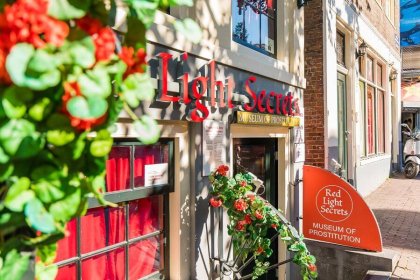
Red Light Secrets Amsterdam – Museum of Prostitution
Visit Amsterdam’s Red Light Secrets – Museum of Prostitution and learn more about the ladies behind the glass windows.

Maritime Museum
Dive into history of Amsterdam in the National Maritime museum and see how the naval history helped shape the city

Take a canal cruise
Admire Amsterdam’s distinctive architecture from the water and get a new perspective of this fascinating city