

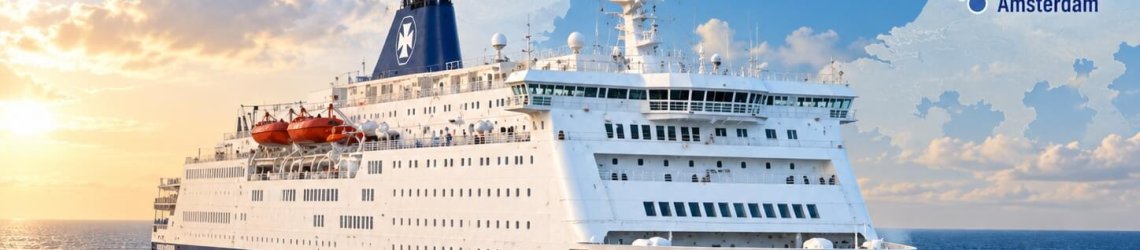
DFDS Amsterdam to Newcastle Ferry Review: Our Honest Experience
Is the DFDS ferry from Amsterdam to Newcastle worth it? For us, a group of nine Dutch mates on our yearly lads’ trip, it absolutely was. We sailed IJmuiden–Newcastle and back in May/June 2026, paid every cent ourselves, and got two nights on the North Sea, an all-you-can-eat dinner buffet and a breakfast that saved us from our hangovers, all for about €190 per person. The trick? We booked almost eight months ahead; a few months later, the same trip cost more than double. Here’s our honest review: what’s great, what isn’t, and everything you want to know before you book. Please note that all the prices mentioned in this article are subject to change and for indicative purposes only!
Our verdict in short
- Rating: 7.5/10
- Best for: groups of friends, families with children looking for a new short break adventure, couples on a romantic weekend getaway, foot passengers on a budget, people travelling with a car or lots of luggage and ultimately anyone who wants the journey to be part of the trip.
- Less ideal for: light sleepers who need a cool room, travellers experiencing sea sickness, and anyone in a hurry (it’s an overnight crossing of almost 17 hours).
- The good: surprisingly excellent buffet, friendly and attentive staff, solid breakfast, lively bars with live music, smooth check-in, cheap parking at the terminal.
- The not-so-good: basic cabins get very hot in summer and you can’t open the window, wifi costs extra, and the DFDS website kept freezing when we tried to book for a group.
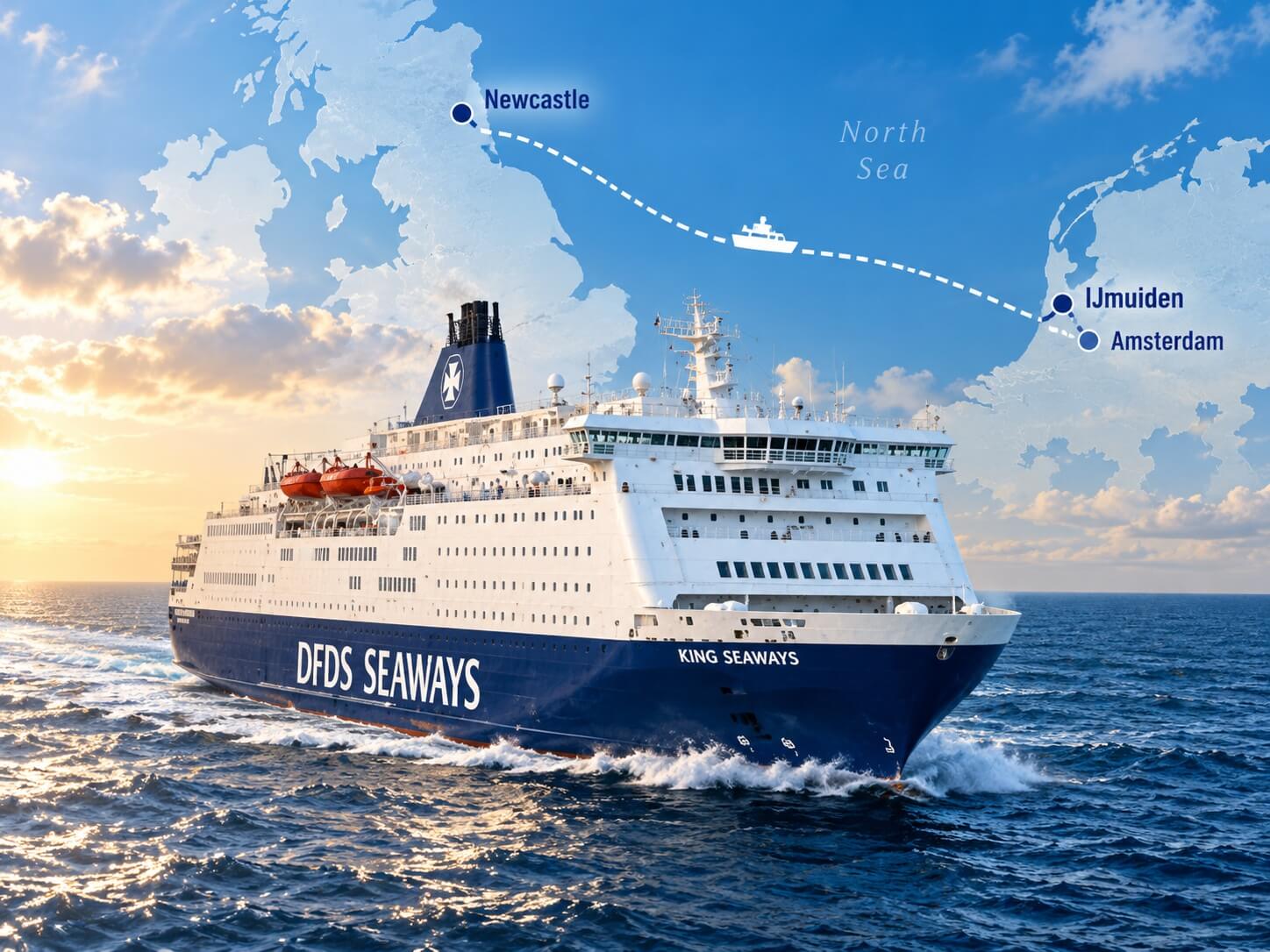
DFDS Amsterdam–Newcastle ferry: quick facts
| Route | IJmuiden (Amsterdam) ⇄ Newcastle (Port of Tyne, North Shields) |
| Sailings | Daily, overnight, in both directions |
| IJmuiden → Newcastle | Departs 17:30 (Dutch time), arrives around 09:15 (UK time) |
| Newcastle → IJmuiden | Departs 17:00 (UK time), arrives around 09:45 (Dutch time) |
| Crossing time | About 16¾ hours; the UK is 1 hour behind the Netherlands |
| Ships | King Seaways and Princess Seaways |
| Currency on board | Euro (cash, card and contactless) |
| What we paid | €1,916.20 return for 10 people, incl. cabins, 2 dinner buffets and 2 breakfasts (≈ €192 p.p.) |
| Documents | Passport + UK ETA (£20) for EU travellers |
| Wifi | Paid packages, from about €5 per hour |
Times are DFDS’s standard schedule; always check your own booking.
Why we took the ferry instead of flying
Every year my group of friends goes on a “mannenuitje”, a lads’ trip. Two of us get picked to organise it, and this year I was one of the lucky two. For several years in a row we’d stuck to the same tried-and-tested formula: a villa somewhere warm, reached by plane.
This time we wanted something different. Those villa trips kept getting more expensive, and we wanted to prove a great weekend away could be done for less. We also liked the idea of leaving the plane at home for once and making the journey itself part of the fun. Newcastle, one ferry ride from home, ticked every box.
We started with ten guys. One dropped out just before departure for the best possible reason: his girlfriend was about to give birth. So nine of us sailed. In Newcastle we’d booked a big house through Airbnb.
We deliberately left our cars at home, so nobody had to be the designated driver and everyone could enjoy a drink. That made all of us foot passengers, which, as you’ll read, works perfectly on this route.
Full disclosure: we paid for this entire trip ourselves. It wasn’t sponsored by DFDS, and everything in this review is our own honest opinion. This article does contain affiliate links: if you book through them, we earn a small commission, at no extra cost to you.
The route explained: “Amsterdam” actually means IJmuiden
DFDS sells this route as Amsterdam–Newcastle, but neither port is in the city it’s named after. Take this into account when you plan your journey to and from the terminal.
- “Amsterdam” = IJmuiden. The ferry leaves from IJmuiden, a harbour town on the North Sea coast where the North Sea Canal meets the sea. It’s roughly 25–30 km west of Amsterdam city centre, about 40 minutes by car or coach.
- “Newcastle” = North Shields. On the British side you dock at the Port of Tyne in North Shields, about 30 minutes from Newcastle city centre.
The good news: both terminals have a DFDS coach that connects with the ferry, so as a foot passenger you’re never stranded. More on that below.

Booking the DFDS ferry: what we paid and how
We booked early, and that paid off. As soon as we knew who was available and where we were going, we started booking: on 6 October 2025, almost eight months before our trip (28 May to 1 June 2026). Booking early gave us plenty of choice in accommodation and kept the ferry price low. How low? When we checked the exact same trip again in spring, the price had more than doubled.
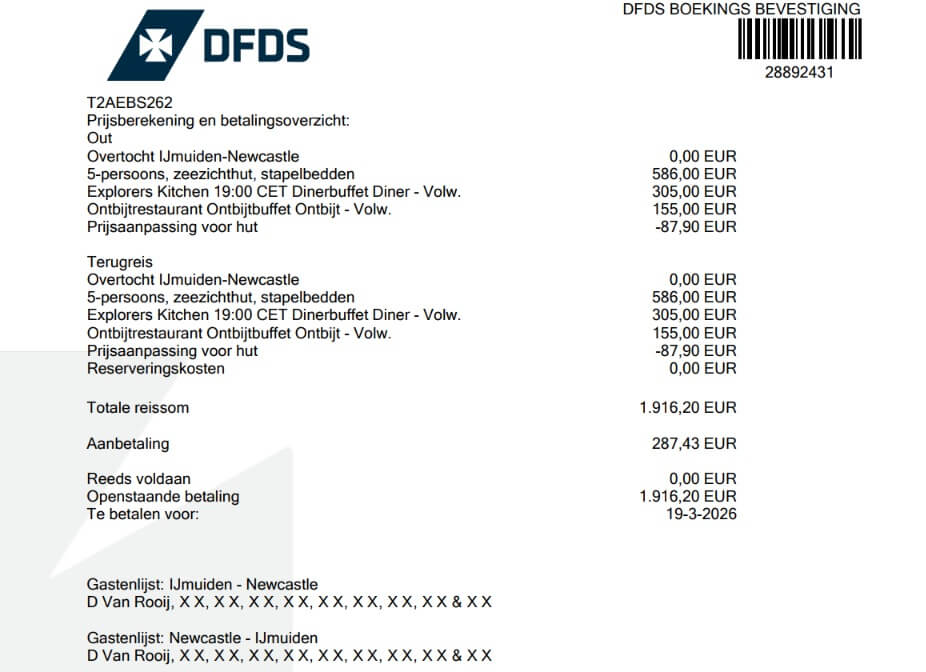
We booked a return ticket for 10 passengers with two 5-person cabins, including two dinner buffets and breakfast in DFDS’s Explorer Kitchen. The total amount for 10 passengers came to €1916,20. A direct down payment of €287,43 was required, and the rest was due on the 19th of March.
What we paid
| Total for 10 people | €1,916.20 |
| Per person | ≈ €192 |
| Included | Return crossing, 2 nights in a cabin, 2 dinner buffets, 2 breakfast buffets |
| Cabins | 2 × 5-berth sea view cabins (the most basic option) |
That’s roughly €96 per night for transport, a bed, dinner and breakfast. Try finding that combination with a flight and a hotel.
Worth knowing: the friend who dropped out couldn’t get a refund for his berth. By the time he knew he couldn’t come, prices had gone up so much that switching to a 4-berth cabin would have cost more than the 5-berth cabin we’d already booked. His pre-booked meals, however, were refunded. Early fares are cheap, but don’t count on flexibility.
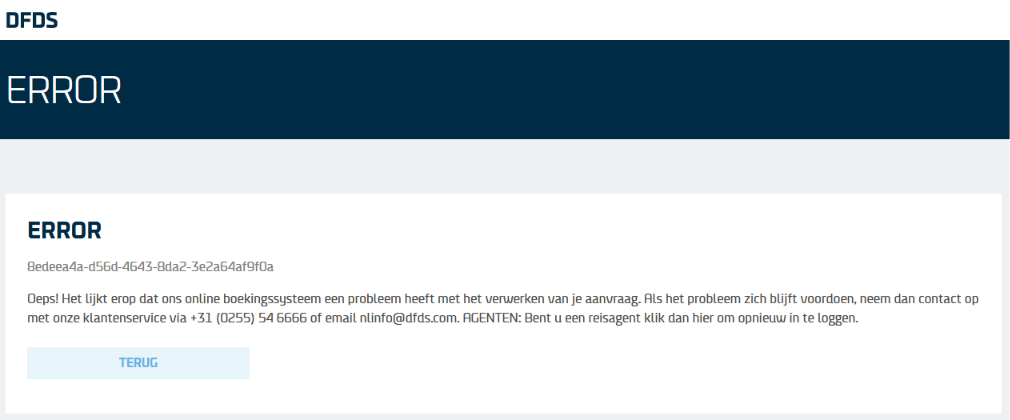
When using the booking functionality on the DFDS website, I ran into this error quite frequently. It seems related to cookies because when I used a private browser, it didn’t happen as often.
Booking tips
- Book early. This is our number one tip. We booked almost eight months ahead; the same trip booked in spring cost more than twice as much.
- Allow yourself at least two nights at your destination. Both Amsterdam and Newcastle have a lot to offer, and although the ferry crossing is part of the adventure, you want to have at least the same amount of time at your destination as you spend on travelling.
- Big group? Pick up the phone. We compared prices on the DFDS website a lot, but it often froze during booking. Because of our group size, we eventually had to book by phone anyway.
- Add meals when you book. Pre-booking the dinner and breakfast buffet is cheaper than paying on board, and it guarantees you a table at your chosen time.
- Consider your comfort choice wisely; if you’re not on a budget, the Commodore upgrade does offer more comfort. If you’re used to a bit of comfort and value your night’s rest, a Commodore room upgrade will offer you quite a bit more space and comfort. The standard rooms do have a bit of a hostel vibe with the bunk beds, especially if you plan on staying in a standard room with more than two adults. Then again, it’s just one night; the standard rooms do have one can practically ask for.
- If you have problems with the DFDS website crashing, try a private browser. I personally ran into this issue several times when booking in October 2025, and at the time of writing, this issue still seems to persist, as pictured above,
Getting to the IJmuiden ferry terminal
Arriving about 75 minutes before departure was plenty for us. The ferry leaves IJmuiden at 17:30; we got there around 16:15 and were on board quickly.
Your options to get there
- Dropped off. Several of our friends were dropped off by their girlfriends. It’s the easiest option if someone’s willing to drive.
- Park at the terminal. One friend left his car at the terminal and I rode along with him. Parking cost €50 for the whole trip (four nights), which we thought was very reasonable.
- DFDS coach from Amsterdam. DFDS runs a connecting coach between Amsterdam (near Centraal Station) and the terminal. It takes about 40 minutes and needs to be booked in advance. It leaves from De Ruijterkade Oost, on the east side of Amsterdam Centraal; check the current price and departure time when you book.
- Public transport. There’s no convenient public transport right to the terminal, so as a foot passenger the DFDS coach is your best bet.

One part of our group was dropped off and the others carpooled to the DFDS terminal. The cost for parking at the DFDS terminal was €50,-.
Check-in, passport control and the UK ETA
Check-in and passport control were quick and smooth. When we booked, DFDS reminded us that we needed a UK ETA (Electronic Travel Authorisation), so everyone had theirs sorted before we left.
Since 2025, most EU travellers need an ETA to enter the UK, including by ferry. It costs £20, is valid for multiple trips over a set period, and you apply via the official UK government website or app. Apply well before you travel and only use the official channel; other websites charge extra.
Are you British and travelling to Amsterdam? You don’t need an ETA for the Netherlands, but since 10 April 2026 the EU’s Entry/Exit System (EES) is fully operational. Instead of a passport stamp, your fingerprints and a photo are recorded at the border, so allow a little extra time on your first crossing.
Boarding and first stop: the Sky Bar
Our first stop on board was obvious: the Sky Bar on the top deck. The sun was out, it was around 25 degrees and we’d come to celebrate. Sailing out of IJmuiden with a cold beer in your hand is a great way to start a weekend away.
We weren’t the only ones with that idea, though. Because we boarded relatively late, every seat at the Sky Bar was already taken. We grabbed a first beer and headed back inside.
Tip: want a spot on the Sky Bar terrace for departure? Board early, especially on a sunny day.
Beer prices were fair for a ferry: half-litre cans of various brands for around €5–6.
We sailed out on the Princess Seaways and came back on the King Seaways. Both ships offer the same facilities on this route, so this review applies to either.
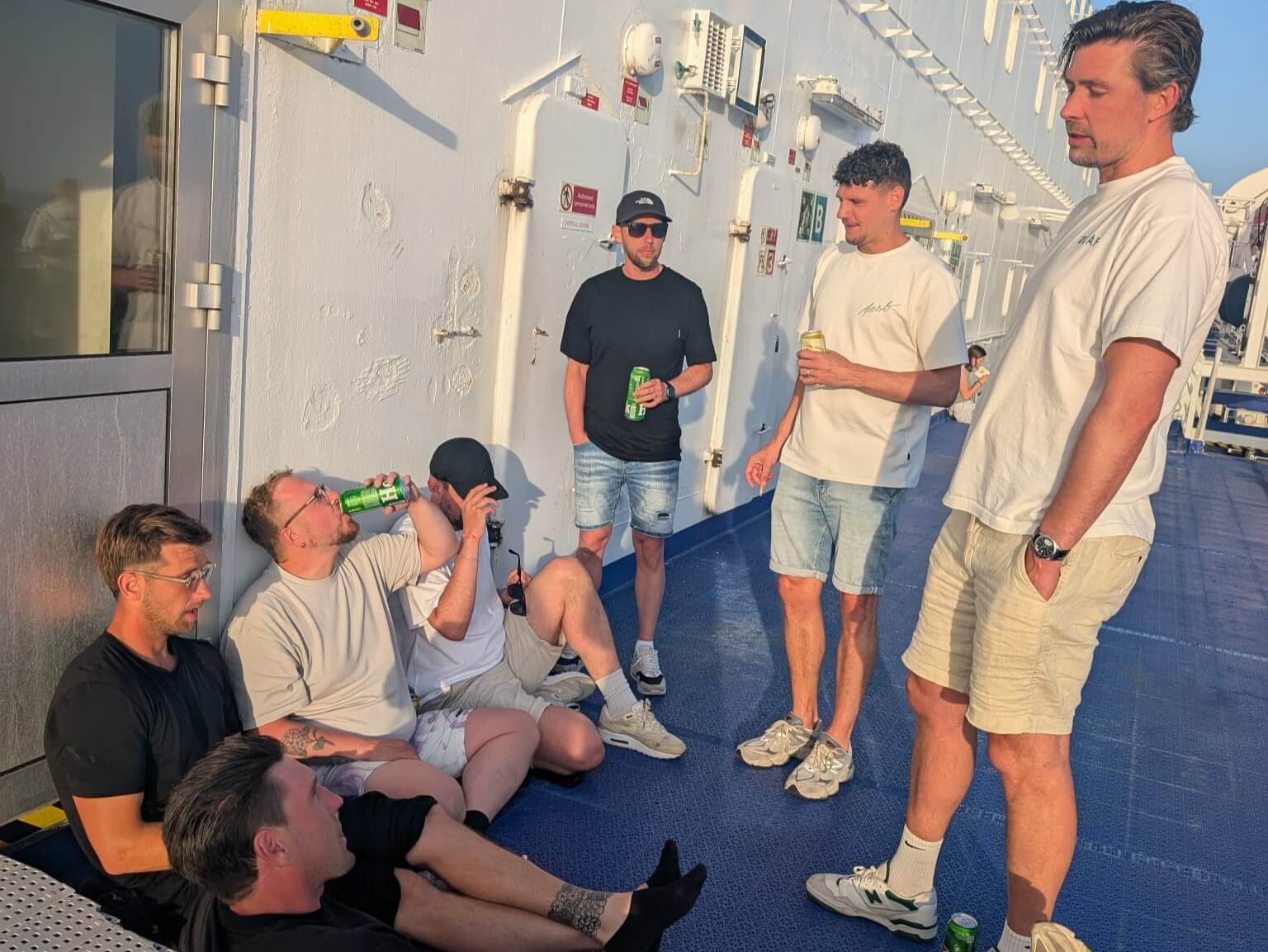
Since the Skybar was already packed, we decided to enjoy the weather on the outside deck near our cabins.
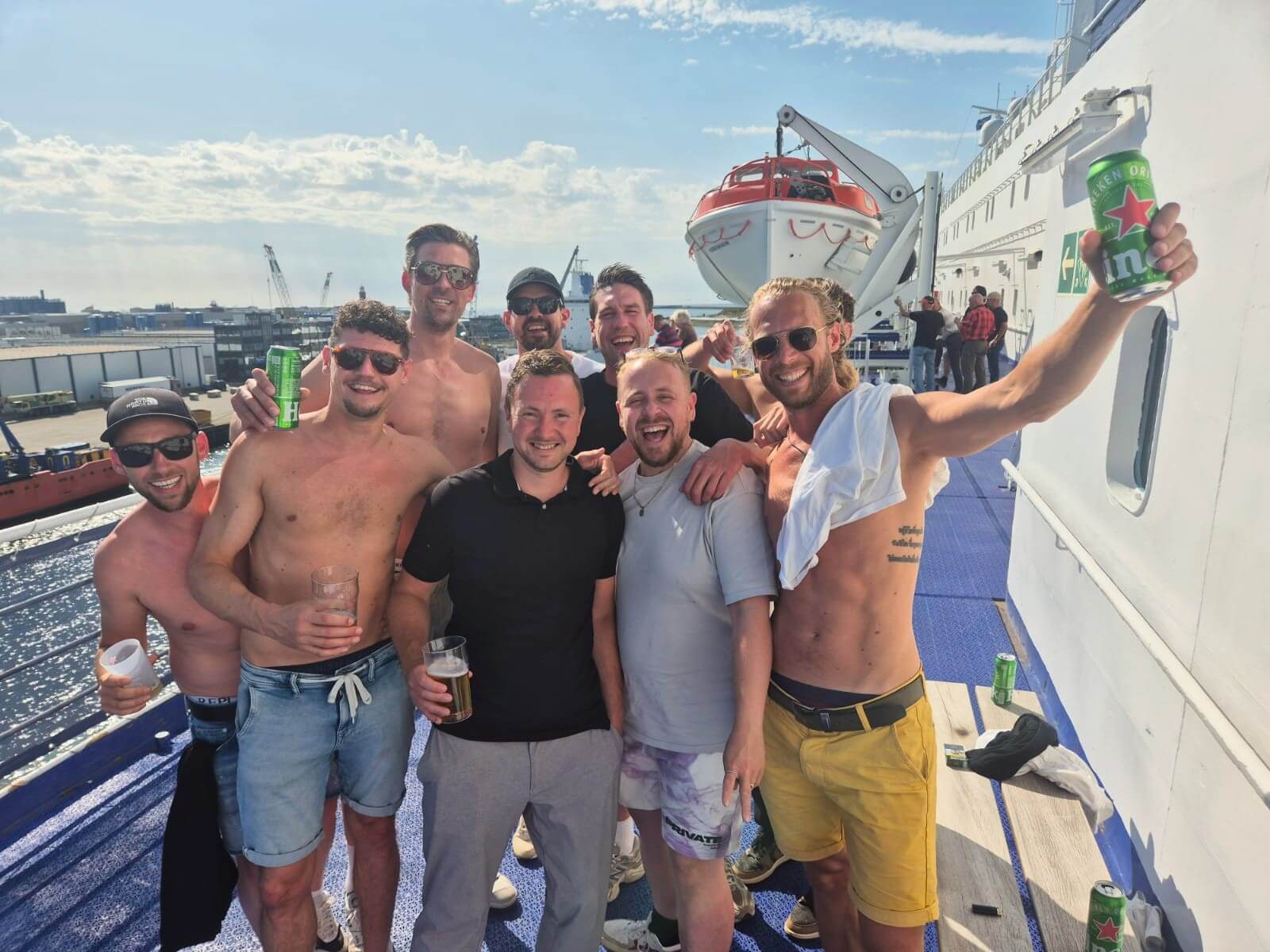
A few beers in, we were enjoying the sunshine on the deck outside.
The standard cabins: basic and clean
We went for the cheapest cabins: basic, clean and perfectly fine for a night’s sleep, but hot in summer. With nine of us, we booked two 5-berth cabins.
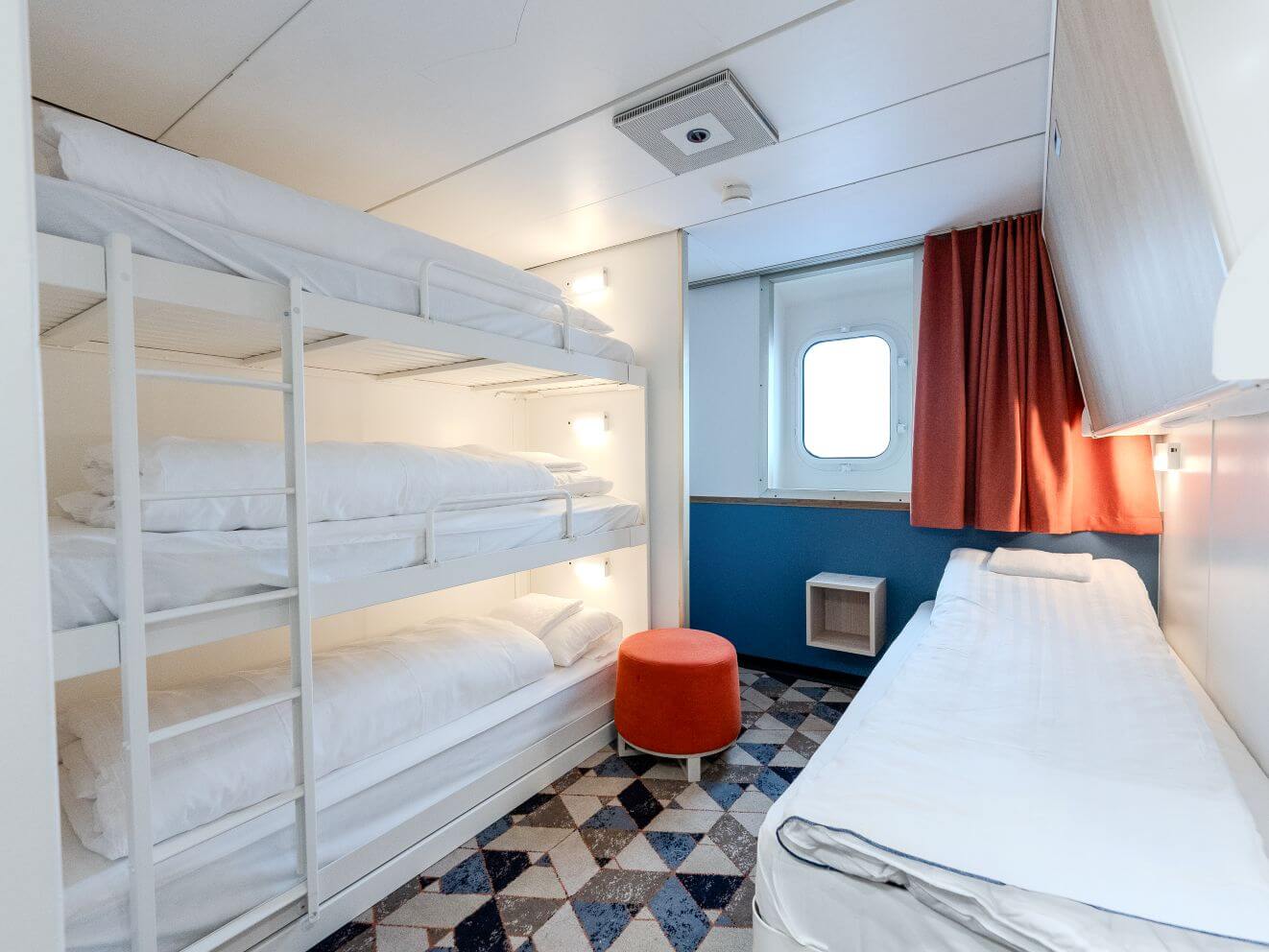
This is what the 5-person cabin looks like. You can imagine that with 5 full-grown men, it can become quite stuffy, especially on a warm summer day.
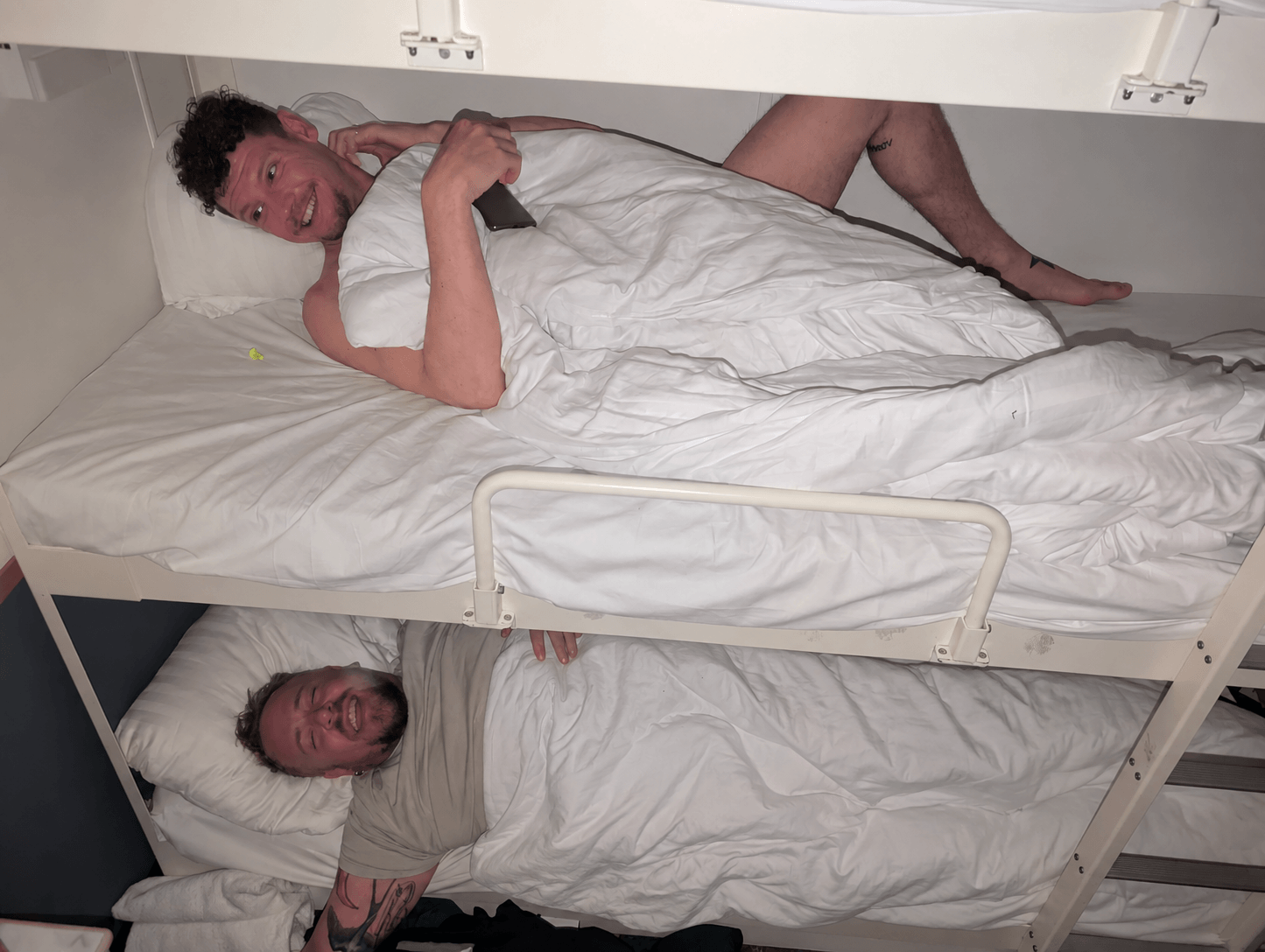
Beyond the marketing imagery, this is what it’s like waking up slightly hungover, with the view from the top bunk in the 5-person standard cabin.
What our 5-berth cabin was like
- Beds: bunk beds, three stacked on one side and two on the other. They’re on the small side if you’re used to a double bed, but the mattresses weren’t uncomfortable.
- Bathroom: a compact private bathroom with a toilet and shower.
- Space: very compact, but you really only go there to freshen up and sleep.
- Cleanliness: simple, but clean.
- Window: we had a sea view cabin, but the window doesn’t open.
The downside: heat and stuffy air
With summer temperatures of around 25 degrees, the cabin was very warm, and the temperature was hard to control. After a night with five grown men in a small cabin, the air was pretty stuffy. Because the window couldn’t be opened, we woke up early and didn’t really fall back asleep.
High deck or low deck?
Our cabin on the way out was on deck 9. High up means you’re far from the engine room, so we heard little to no engine noise. The trade-off: in rough seas, you’ll feel the ship’s movement more up high. In our case the sea was calm, so we barely noticed we were on a boat.
On the way back we were high up again and slept fine, just not for very long (blame the karaoke bar). Friends with a cabin on deck 6, however, were bothered a lot by engine noise. Our advice: book a cabin on a high deck.
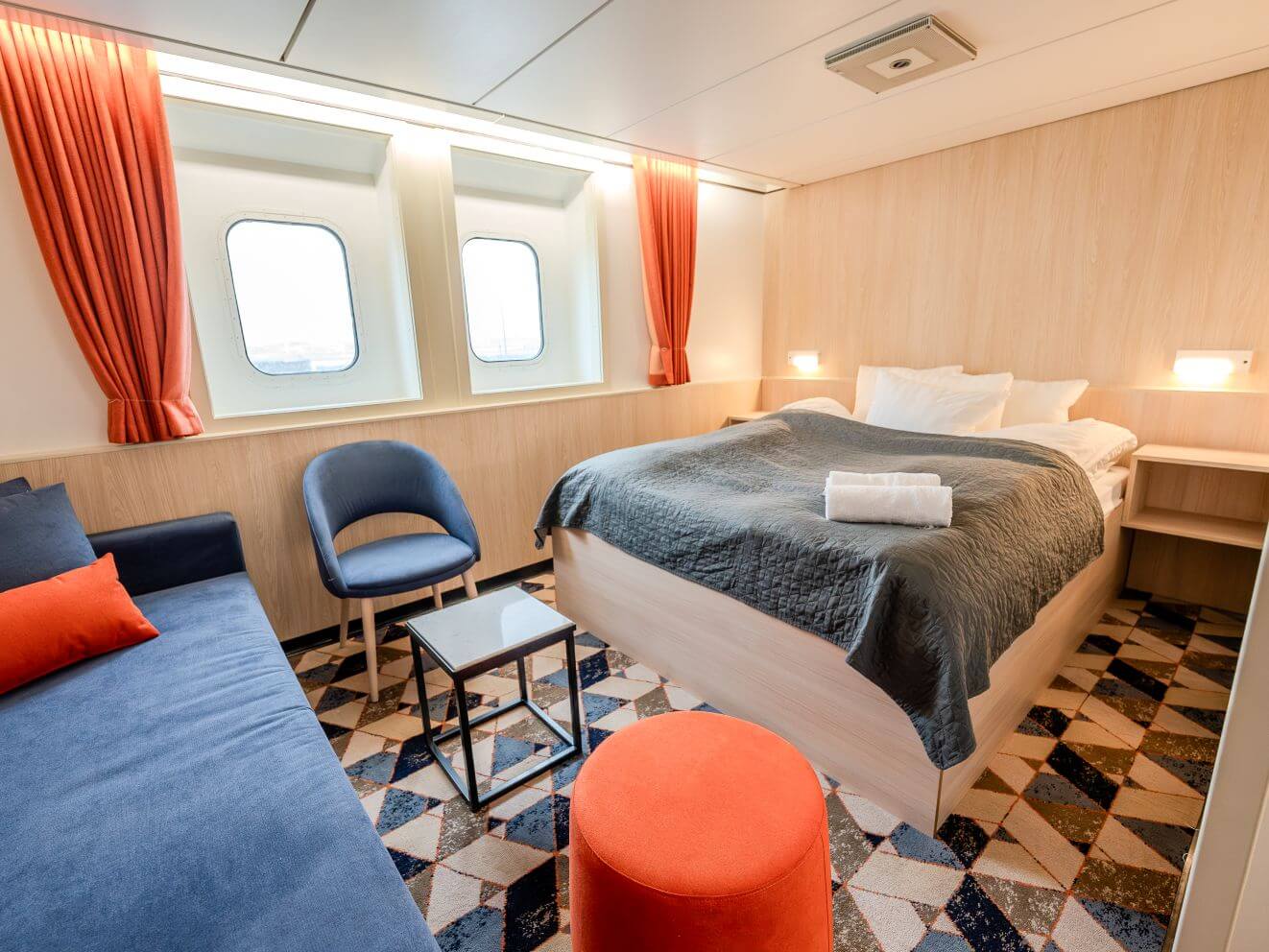
This is what the Commodore rooms look like. This room type costs about 40% more than the standard room type.
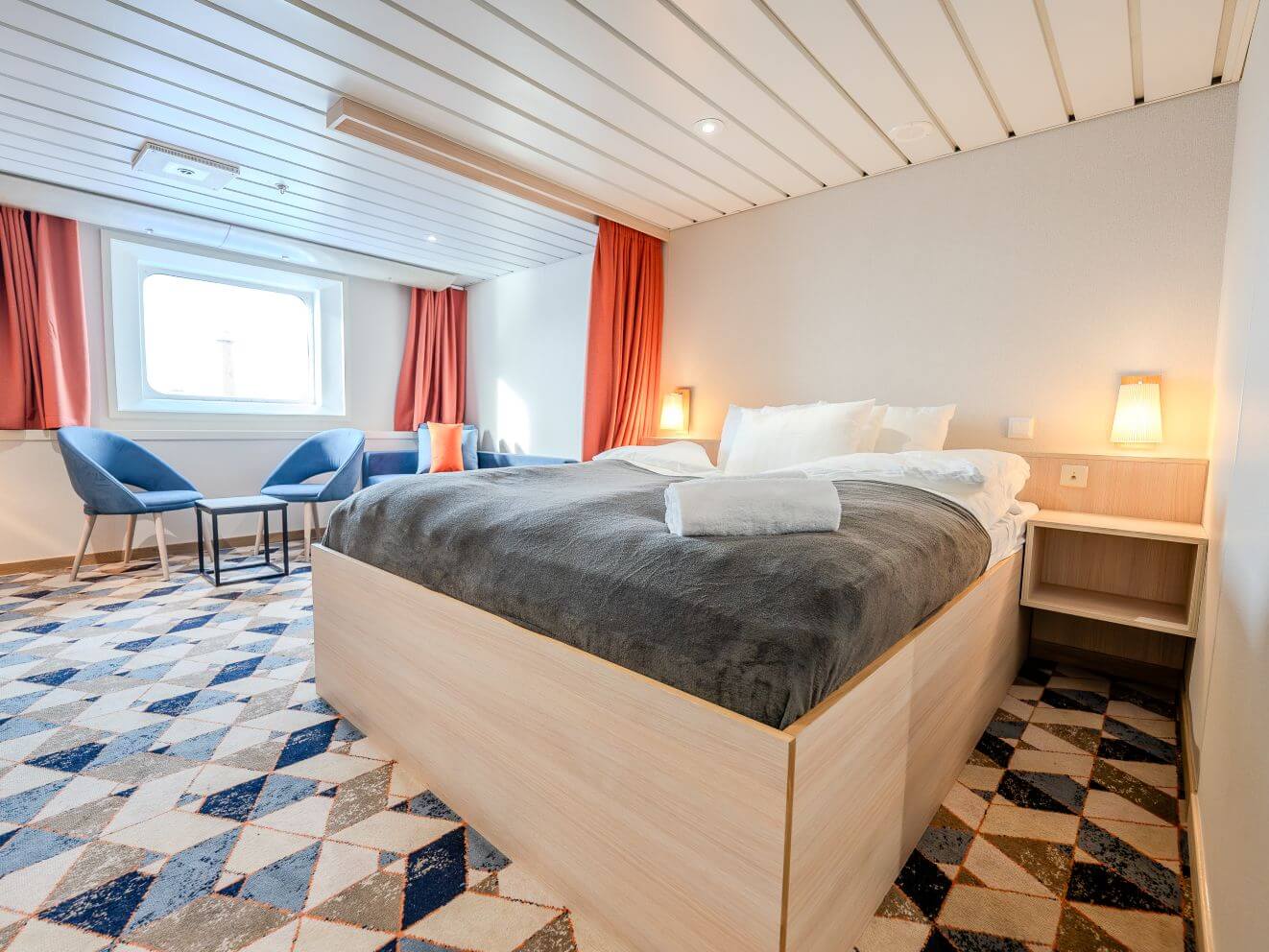
The Commodore De Luxe room, looks similar to the Commodore rooms, but comes with perks including free breakfast, Wi-Fi, and complimentary drinks.
Other cabin types
If you want more comfort, the first upgrade we’d recommend is limiting the number of adults per room to 2 in the standard rooms. If you have just a bit more budget at hand, you should really consider a Commodore room upgrade. These rooms come with a bigger, more comfortable 2-person bed. The Commodore room upgrade will cost you approximately 40% more than the standard rooms. Beyond the Commodore room, DFDS also offers a Commodore de luxe room, which comes with perks such as free Wi-Fi, free breakfast and complimentary drinks.
Food and drink on board: the buffet beat our expectations
The food was the biggest surprise of the trip. The dinner buffet was genuinely good, and the breakfast set us up perfectly for a day in Newcastle.
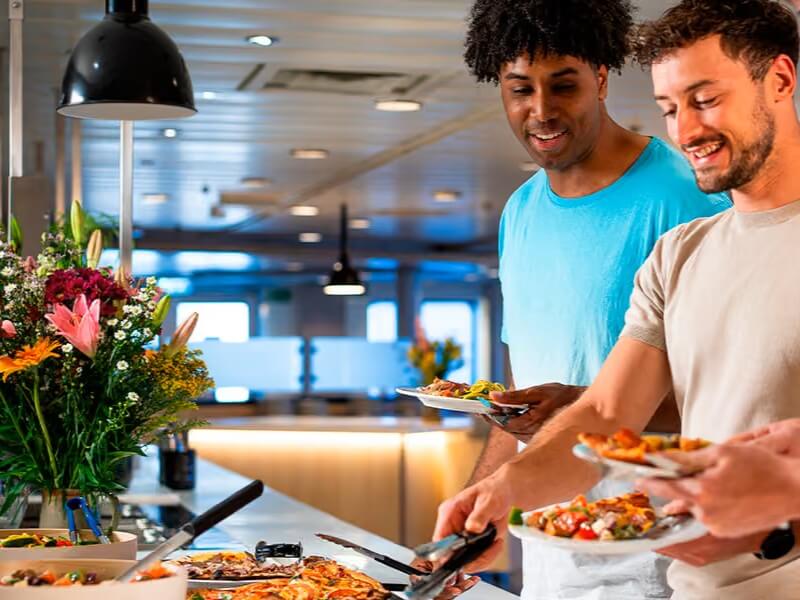
The Explorer’s Kitchen dinner buffet
The buffet had a huge choice of dishes from all over the world: lots of salads, pasta, meat, fish and chicken dishes. Dishes were constantly refilled, so nothing ran out. Although you won’t like every dish, there’s so much choice that there’s something for everyone. Most of us thought almost everything tasted really good. One of our friends liked it so much he ate far too much. Don’t expect a full culinary experience from the buffet, but rather a very decent meal with plenty of options to choose from. If you prefer a more gastronomic experience, the DFDS cruise also features a restaurant called North Sea Bistro.
To finish, there was soft-serve ice cream. The staff worked incredibly hard to keep up with pouring drinks and clearing tables.
We’d booked and reserved our dinner in advance, which turned out to be a smart move. We could walk straight in, and after a few beers we were more than ready for a proper meal. Also, booking in advance is cheaper than paying on the spot.
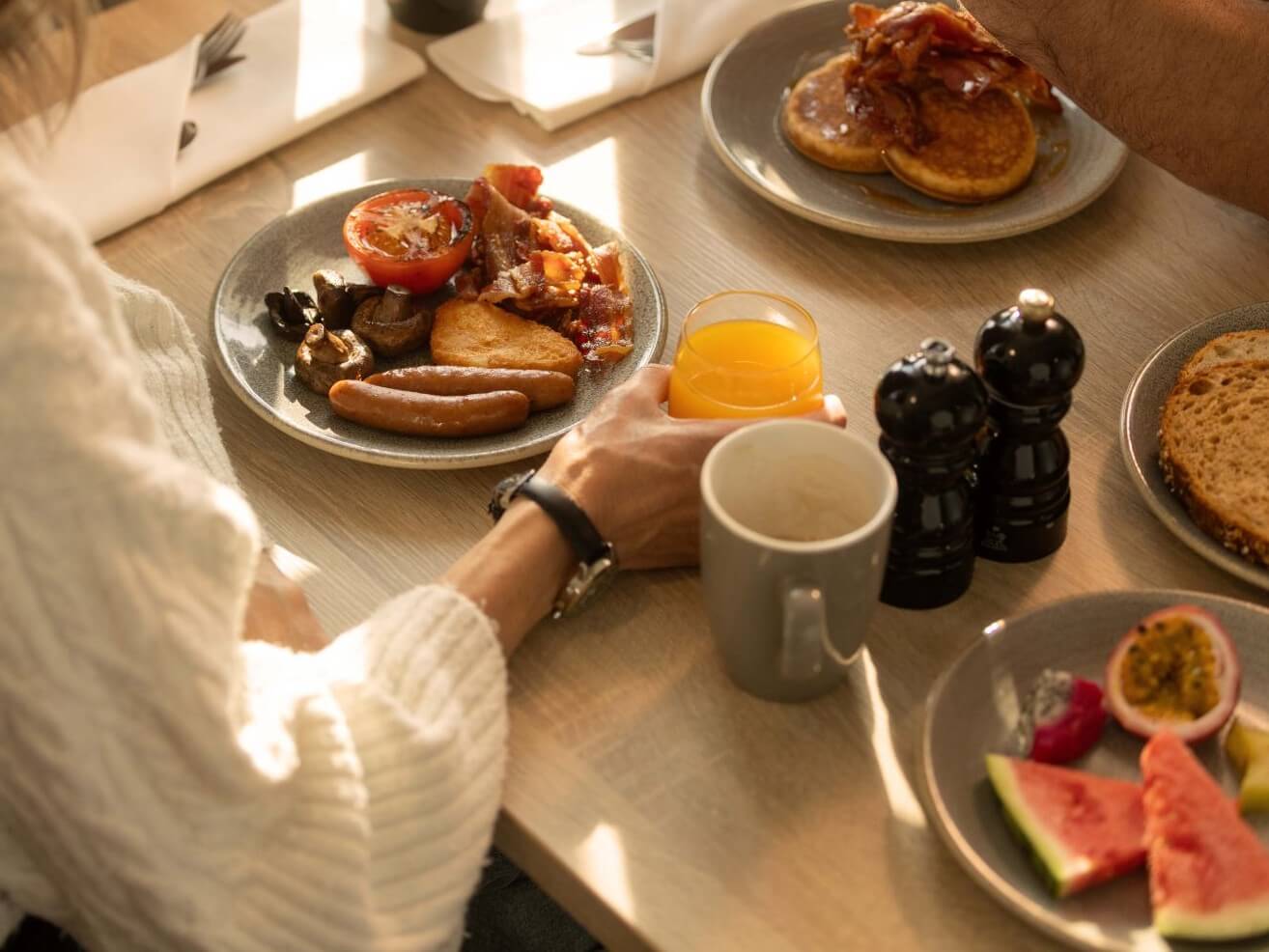
Breakfast: the hangover cure
Breakfast is served in the same restaurant as dinner. We went at around 8 or 9 am, and it was very good too, with lots of choice:
- bread, cheese and jam
- a full English-style hot section: eggs, bacon, sausages and beans
- yoghurt with toppings
- plenty of fresh fruit
- coffee, tea and milk included
Our only remark: the scrambled eggs looked a bit jelly-like, but they tasted fine. For many of us, breakfast was essential after a big night of drinking. We needed something solid to fight the hangover.
Drinks prices
Half-litre cans of beer cost around €5–6 at the bar. Payment is in euros, by card, contactless or cash. Other drinks cost about what you’d pay in a regular bar or club: not outrageous, but not cheap either.
Entertainment and facilities on board
The Columbus Club is where the evening happens. After dinner we moved there, and it’s where we spent the rest of the night.
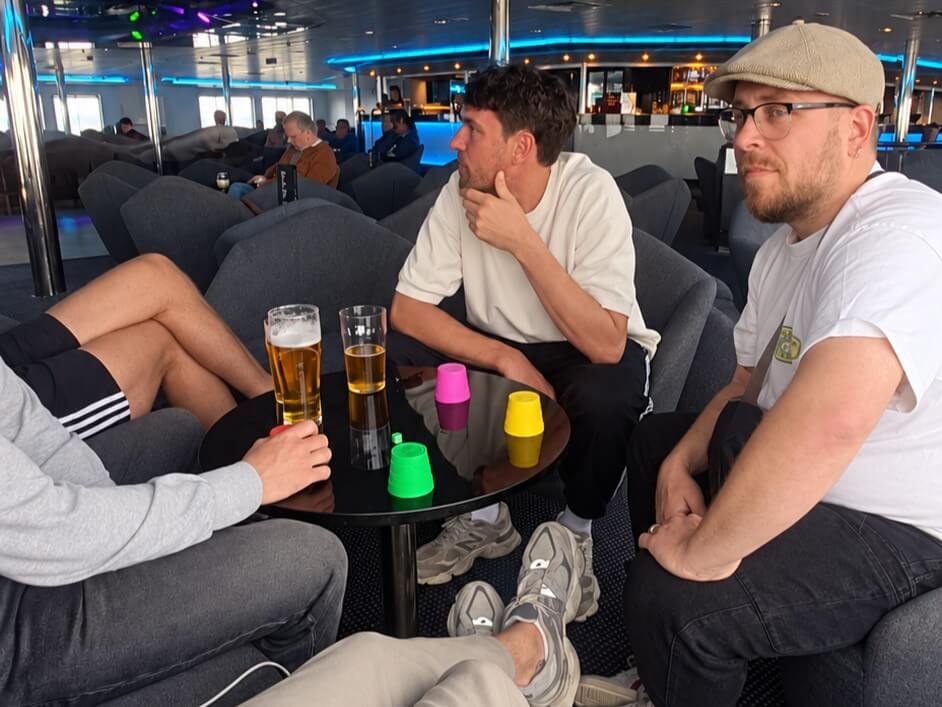
In the Commodore club there’s plenty of space to have a seat at a table and catch up or play a game.
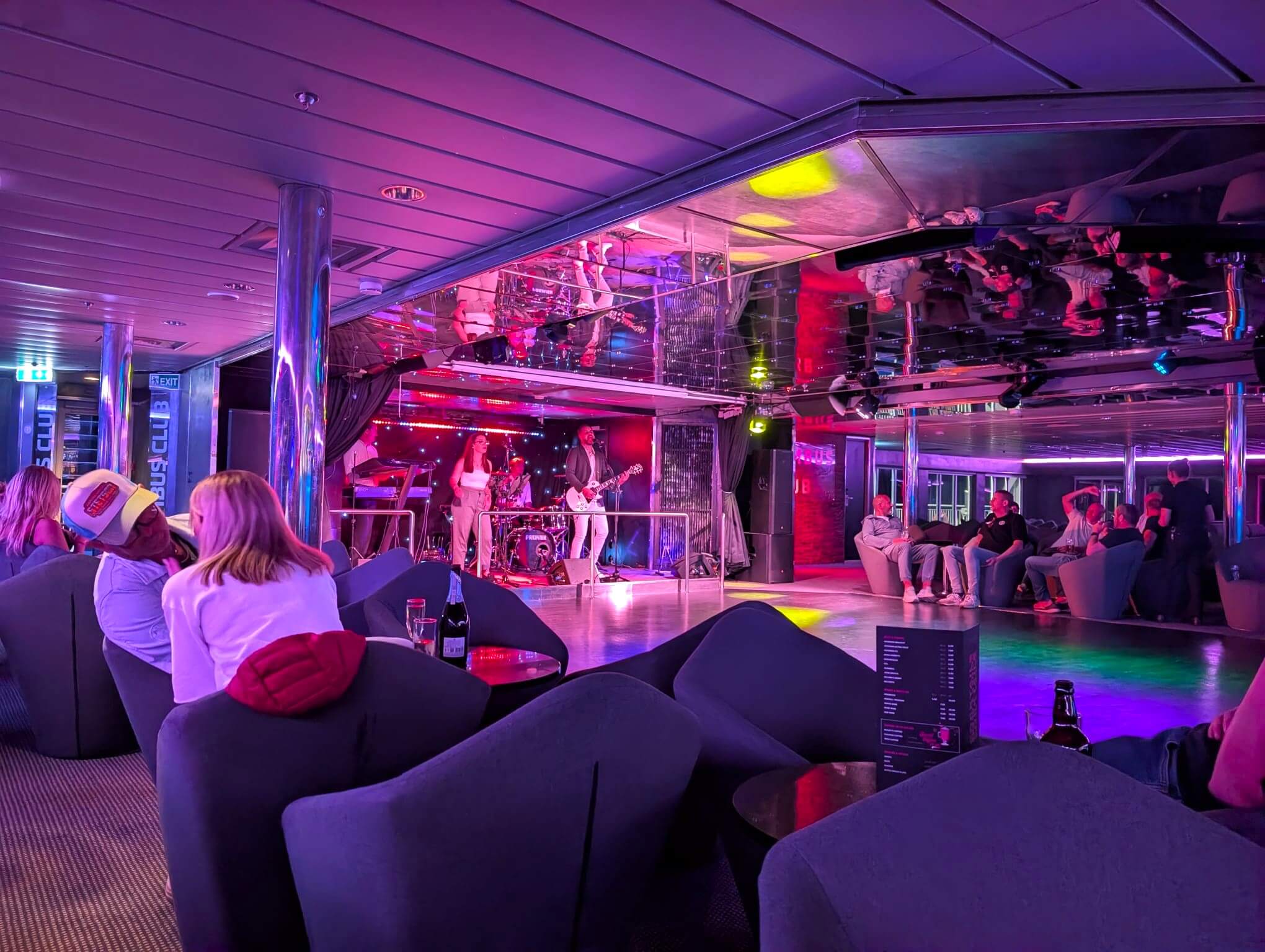
In the evening the entertainment part starts with a live band, singers and an optional game of bingo as well as a music quiz.
Columbus Club: live music and a good atmosphere
The Columbus Club is the ship’s main entertainment bar, with live music and a dance floor. The singer and band were fun to listen to and played popular songs across all kinds of genres. We kept ourselves busy with a dice game, some cards, and good conversation over a drink. Since we’d started early, the group gradually trickled off to the cabins between midnight and about 2 am.
Bingo
For those who are interested, there will be a bingo game that you can join. Of course, this is completely optional; you can also just sit back and have a conversation or play a game.
Music quiz
A music quiz was also hosted where everyone could participate in a game of “Guess the song”.
The “casino”: fun, but don’t expect Vegas
On the way to the Columbus Club, you pass a few small gaming areas with slot machines and an automated roulette table. It’s a fun little casino-style corner, but don’t expect too much of it.
Who else is on board?
The passengers were a real mix. Roughly, you’ll meet:
- older travellers and retirees on holiday
- families with children
- campers and hikers
- couples
There were some other groups of friends, but they were a minority, and we were one of the few big groups. So on our crossings it wasn’t a party cruise. That’s just a snapshot, though: on other dates, or on a Friday or Saturday sailing, there may well be more of a party vibe on board. And even on our trip there were plenty of fun people to hang out with, and we had a great time with them.
Wifi and mobile roaming: switch off your data!
Important: turn off mobile roaming as soon as you leave port. Out at sea your phone connects to the ship’s maritime satellite network, which isn’t covered by EU roaming and can be extremely expensive.
There is wifi on board, but you have to pay for it, which feels a bit old-fashioned these days. Prices we found for DFDS’s North Sea ships (check on board, they can change):
| Package | Price | Valid for |
|---|---|---|
| Surf Small | €5 | 1 hour |
| Surf Medium | €9 | 3 hours |
| Surf Large | €17 | 24 hours |
| Surf Streaming (up to 1 GB) | €22 | 24 hours |
| Surf MiniCruise | €26 | 44 hours |
Wifi is free in Commodore cabins.
Other facilities
The ships also have a duty-free shop, a cinema, a children’s play area and several other bars and cafes. On the way back, tired from the weekend, we fancied a film, but nothing on the schedule appealed to us. So we ended up in the Columbus Club again. With no plans for the next day, a friend and I carried on into the early hours, including a stint at the karaoke bar. Highly entertaining, and luckily we had the day off afterwards.
Hour by hour: what the crossing is really like
This is how our outbound crossing from IJmuiden to Newcastle went, from parking the car to stepping ashore.
| Time | What happened |
|---|---|
| 16:15 | Arrived at the IJmuiden terminal, parked the car |
| ≈ 16:30 | Quick passport control (ETA sorted), straight on board |
| ≈ 17:00 | First beer at the packed Sky Bar on the top deck |
| 17:30 | Departure from IJmuiden in glorious sunshine |
| Evening | Dinner buffet at our reserved time, finished with soft-serve ice cream |
| After dinner | Columbus Club: live band, dice, cards and drinks |
| 00:00–02:00 | The group slowly trickles off to the cabins |
| Early morning | Awake early in a warm, stuffy cabin |
| ≈ 08:00–09:00 | Breakfast buffet, the hangover cure |
| ≈ 09:15 UK time | Arrival in North Shields (clocks go back 1 hour) |
| + 30–45 min | Off the ship and through customs |
| + 30 min | DFDS bus into Newcastle city centre |
Seasickness and sleeping on board
On our crossings, the North Sea was as calm as a pond. With beautiful summer weather and almost no waves, you could hardly tell you were on a ship. However, one of the guys had been on this cruise before, and he told us that at that time in autumn, the sea was extremely rough, causing seasickness to him and his partner.
The North Sea can be choppy, especially in autumn and winter. If you’re prone to seasickness:
- choose a cabin on a lower deck, in the middle of the ship, where you feel the least movement
- bring earplugs and a blindfold if you’re a light sleeper
- bring seasickness tablets
- go to bed early; sleeping through the crossing is the best remedy
Did we sleep well?
Honestly: so-so, and it wasn’t the sea’s fault. I think the main issue was the size of the cabin shared with five adults; probably the same room with just two adults would have already made a huge difference. The cabin got hot and stuffy, so we woke up early and didn’t fall back asleep. Engine noise wasn’t an issue on deck 9, but friends on deck 6 heard plenty of it on the return crossing.
Don’t forget the time difference: the UK is one hour behind the Netherlands. Going to Newcastle, you gain an hour; on the way back, you lose one.
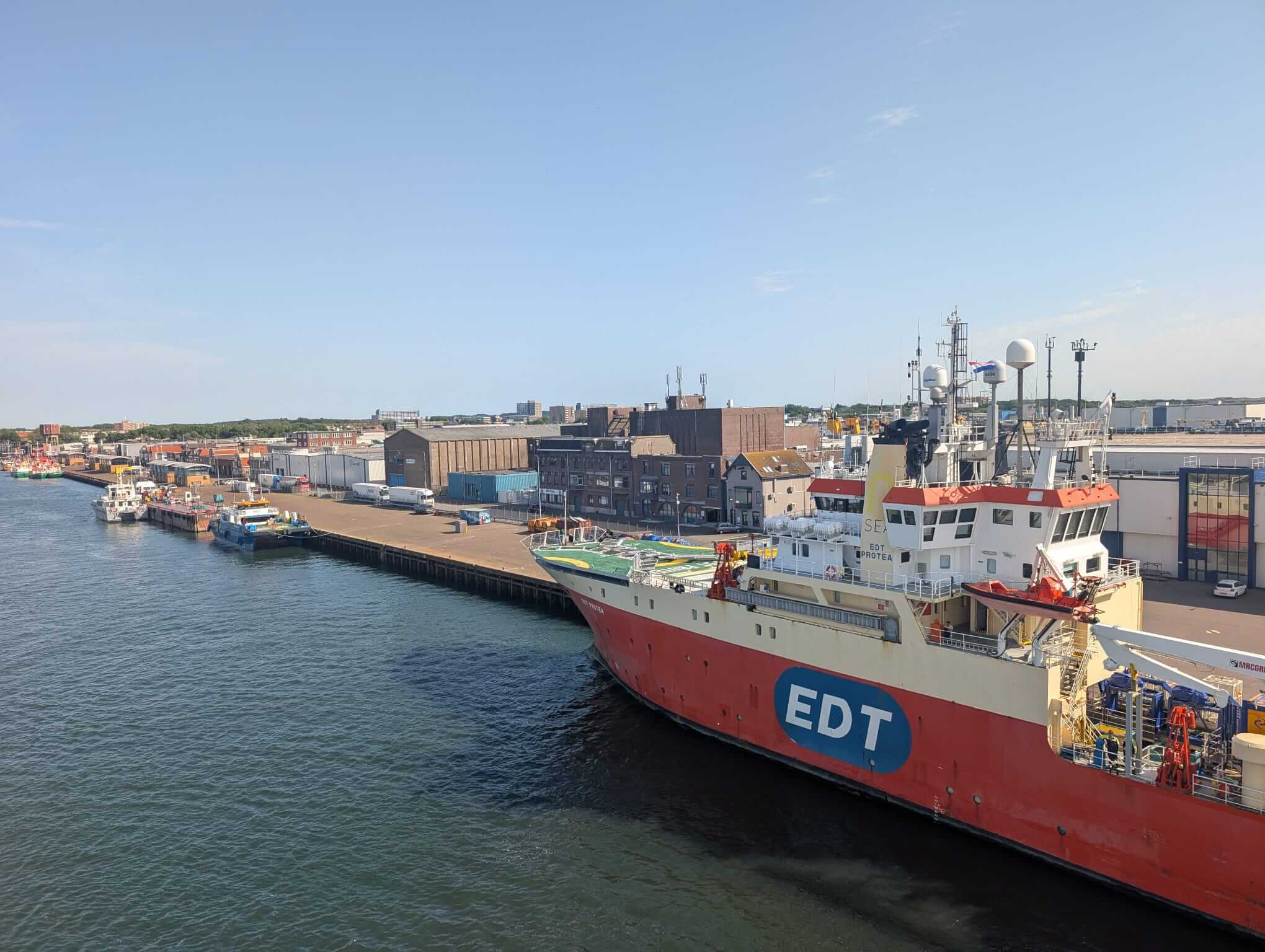
Arriving in Newcastle
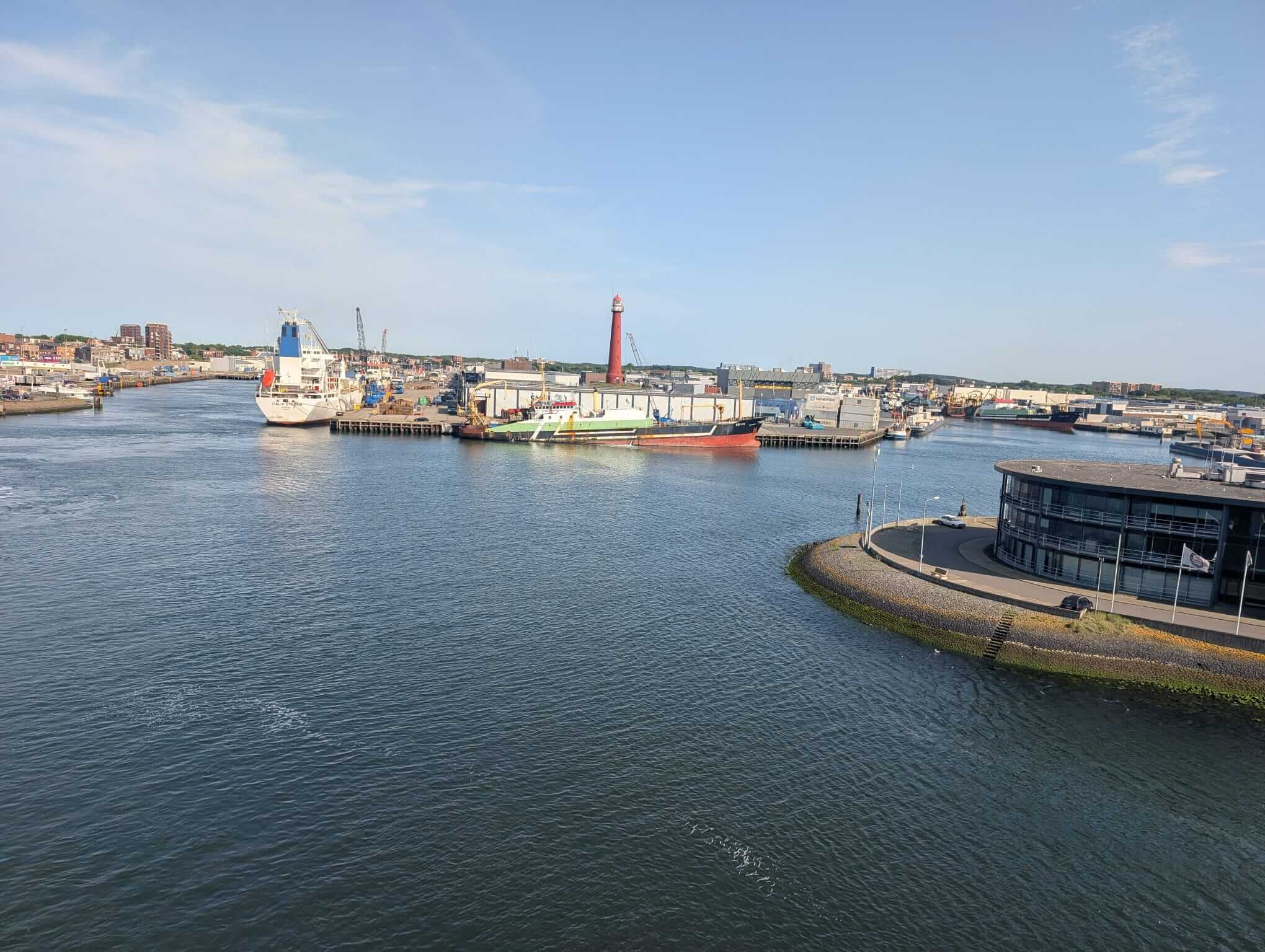
The ferry docks at the Port of Tyne in North Shields at around 09:15 UK time. From there it’s about 30 minutes to Newcastle city centre.
Getting off the ship took a while: somewhere between 30 and 45 minutes, which felt a lot longer with a hangover. Don’t plan anything tight right after arrival. Once through, we took the DFDS bus straight from the terminal into the city centre.
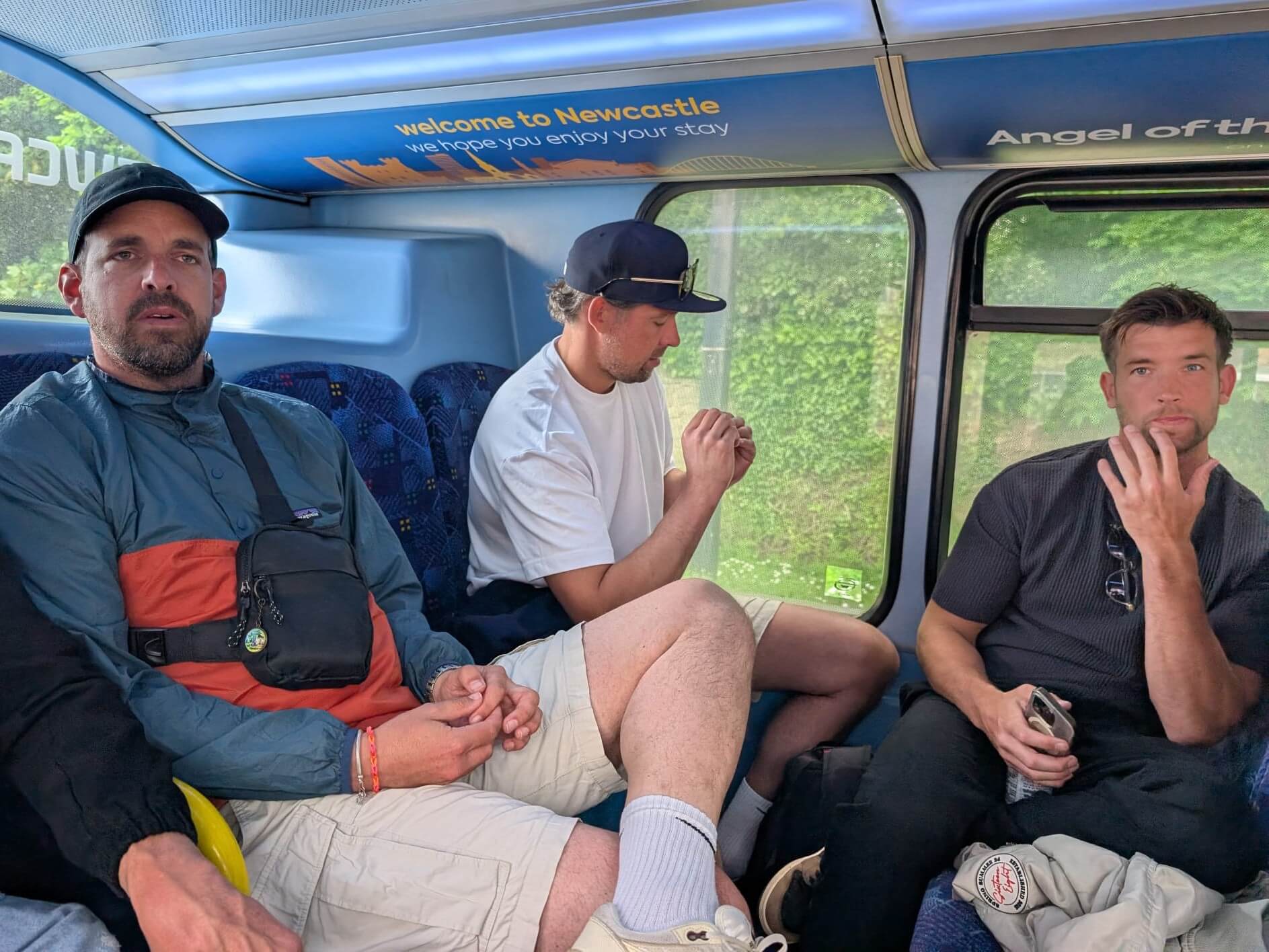
From the terminal to Newcastle city centre
- DFDS coach: waits right outside the terminal and takes about 30 minutes to Bewick Street, opposite Newcastle Central Station. The official fare is £6.60 per person each way; we paid just over €40 for the nine of us. Without your own transport, this is by far the easiest option.
- Taxi: around £15–20 and about 30 minutes to the city centre. An Uber or Bolt costs a similar amount, which adds up quickly for a group.
- Metro: Percy Main station is a 20-minute walk from the terminal. An all-zone day ticket costs £5.90.
Newcastle to Amsterdam: arriving in IJmuiden and getting into the city
Coming from the UK? The ferry leaves Newcastle at 17:00 and arrives in IJmuiden around 09:45 Dutch time. Here’s how to get from the terminal into Amsterdam.
- DFDS coach to Amsterdam: the easiest option. It takes about 40–45 minutes and drops you at De Ruijterkade Oost, right behind Amsterdam Centraal Station. You need to book it in advance.
- Taxi: possible, but pricey for a ride of around 30 km. Book ahead and agree on the fare.
- Public transport: there’s no convenient direct connection from the terminal, so we wouldn’t bother.
- By car: take the A22/A9 towards Amsterdam; skip driving into the centre and use a P+R instead.
On a mini cruise you’ll get roughly five hours in Amsterdam before the coach heads back to the ship. Our tip as locals: stroll through the canals of the Jordaan, have lunch in a cosy brown café, and if you want to visit the Anne Frank House, book tickets well in advance.
Our own return crossing on the King Seaways was much like the way out: the same great buffet, the same lively Columbus Club, plus a late night at the karaoke bar.
Travelling from London instead? Read our guide to London to Amsterdam by ferry.
Ferry vs flying vs train
The ferry is the slowest option, but the only one where your night’s accommodation and the journey are the same thing.
| DFDS ferry | Flight | Train | |
|---|---|---|---|
| Travel time | ≈ 16¾ hours, overnight | ≈ 1¼ hours in the air, plus airport time and transfers | ≈ 8 hours via Brussels/London and a change of trains |
| Accommodation | Included (cabin) | Not included | Not included |
| Luggage | Take what you can carry; bring your car too | Hand luggage limits, paid hold luggage | Generous |
| Bring your car | Yes | No | No |
| Fun factor | Bars, live music, buffet, sea views | Low | Pleasant views, no party |
For our group, the ferry won on fun and on value: we paid about €192 per person for transport, two nights’ accommodation and four meals.
Our tips: what we’d tell a friend before they board
- Book early. We booked almost eight months ahead. A few months later, the same trip cost more than double.
- Travelling in a group? Call DFDS. It saves you a lot of frustration with the website.
- Pre-book dinner and breakfast. Better value, and you can walk straight in.
- No car? Book the DFDS bus too. Do it for both ends of the trip, in Amsterdam and in Newcastle. Neither terminal is in the city centre, the bus waits right at the terminal, and it’s much cheaper than a taxi, Uber or Bolt, especially for a group.
- Apply for your UK ETA in time. Via the official UK government website or app only.
- Board early if you want a seat at the Sky Bar.
- Switch off mobile roaming the moment you leave port.
- Summer crossing? Expect a warm cabin. Don’t squeeze five people into one cabin if you can avoid it, or upgrade to a Commodore cabin.
- Bring a deck of cards or a dice game. It made our evening at the Columbus Club.
- Bring euros or a card. Everything on board is paid in euros.
- If you want to see a specific movie in the cinema, reserve your seat directly after boarding
What we’d do differently
If a good night’s sleep matters to you, consider a Commodore cabin. It’s a higher class with a double bed and more space, which gives you a much better chance of a proper night’s rest than a basic 5-berth bunk cabin. We’d also board a bit earlier to grab a seat at the Sky Bar.
What to pack in your cabin bag
If you’re a light sleeper, make sure to bring earplugs and a blindfold. Some rooms may be noisier than others depending on the proximity to the engine room as well as the bars. Bring your usual toiletries; your cabin has a private shower and toilet. The shower has shower gel and shampoo. Bring a phone charger and maybe a book if you like to read before bed.
Verdict: Is the DFDS ferry to Newcastle worth it?
Yes. For a group of friends looking for an affordable, fun weekend away without flying, it’s hard to beat. For around €190 per person, we got return transport, two nights on board, a dinner buffet that beat all expectations and a breakfast that got us back on our feet.
The cabins are basic and, in summer, too warm. If sleep is your priority, pay a bit more for a better cabin or fewer people per cabin. But as a start and end to a lads’ trip, the crossing itself became one of the highlights of our weekend.
Who it’s for:
- groups of friends on a budget
- couples who like the idea of a mini cruise
- hikers wanting to explore the beautiful highlands in the UK and Scotland
- travellers who want to try out travelling with a cruise ship
- families travelling with a car and lots of luggage
- Brits heading to Amsterdam who want to skip the airport
Who might want to skip it: travellers who are short on time, and light sleepers who can’t stand a warm cabin or experience seasickness easily.
Our rating: 7.5/10. The food and the friendly, attentive staff were the highlights. The hot cabin and the poor night’s sleep that came with it were the biggest letdown.
Pros and cons of the DFDS Amsterdam–Newcastle ferry
| Pros | Cons |
|---|---|
| Great value: ≈ €192 p.p. return incl. 2 nights and 4 meals | Basic cabins are small and get hot in summer |
| Excellent dinner buffet with lots of choice | Cabin windows don’t open, the air gets stuffy |
| Solid breakfast buffet with coffee and tea included | Wifi costs extra; mobile roaming at sea is expensive |
| Friendly, attentive staff | Sky Bar fills up fast on sunny days |
| Lively Columbus Club with live music | DFDS website froze during our group booking |
| Quick check-in and passport control | Long crossing, nearly 17 hours |
| Cheap parking at IJmuiden (€50 for 4 nights) | Getting off the ship in Newcastle took 30–45 minutes |
| The journey is part of the holiday | Neither port is actually in the city it’s named after |
FAQ: DFDS Amsterdam–Newcastle ferry
How long is the ferry from Amsterdam to Newcastle?
About 16¾ hours. It leaves IJmuiden at 17:30 and arrives in North Shields around 09:15 UK time the next morning.
Where does the Amsterdam–Newcastle ferry leave from?
From IJmuiden, about 25–30 km west of Amsterdam. A DFDS coach connects the terminal with the city centre in about 40 minutes.
Can you take the ferry as a foot passenger?
Yes. We travelled as foot passengers with nine people, and it was easy.
How much does the DFDS ferry to Newcastle cost?
We paid €1,916.20 for 10 people return, including cabins, two dinner buffets and two breakfasts: about €192 per person. Prices depend on season and cabin, but above all on how early you book: the same trip booked in spring cost more than twice as much.
How much is parking at the IJmuiden ferry terminal?
We paid €50 for four nights.
Do I need a UK ETA for the ferry to Newcastle?
Most EU travellers do. It costs £20 and you apply via the official UK government website or app.
Is there wifi on the DFDS ferry?
Yes, but it’s paid, from about €5 per hour to €26 for a mini cruise. It’s free in Commodore cabins. Switch off mobile roaming at sea to avoid high costs.
What currency is used on board?
Euros. You can pay by card, contactless or cash.
Is the food on the DFDS ferry good?
In our experience: yes, the dinner buffet was excellent and breakfast was very good.
Is there a casino on the DFDS ferry?
There’s a small gaming area with slot machines and an automated roulette table. Fun, but don’t expect a real casino.
Can you open the window in your cabin?
No. In summer the cabins can get warm.
Can I bring my own alcohol on board?
No. According to DFDS you can’t bring your own alcohol on board, and foot passengers’ luggage is scanned. You can buy drinks at the bars and in the onboard shop.
Can I bring my dog?
Yes: choose the onboard pet hotel (kennel) or a pet-friendly cabin for up to four people and two dogs. A one-way dog ticket costs around £28.
0 Comments on "DFDS Amsterdam to Newcastle Ferry Review: Our Honest Experience"
There are no comments on this post.