


Dutch raw herring
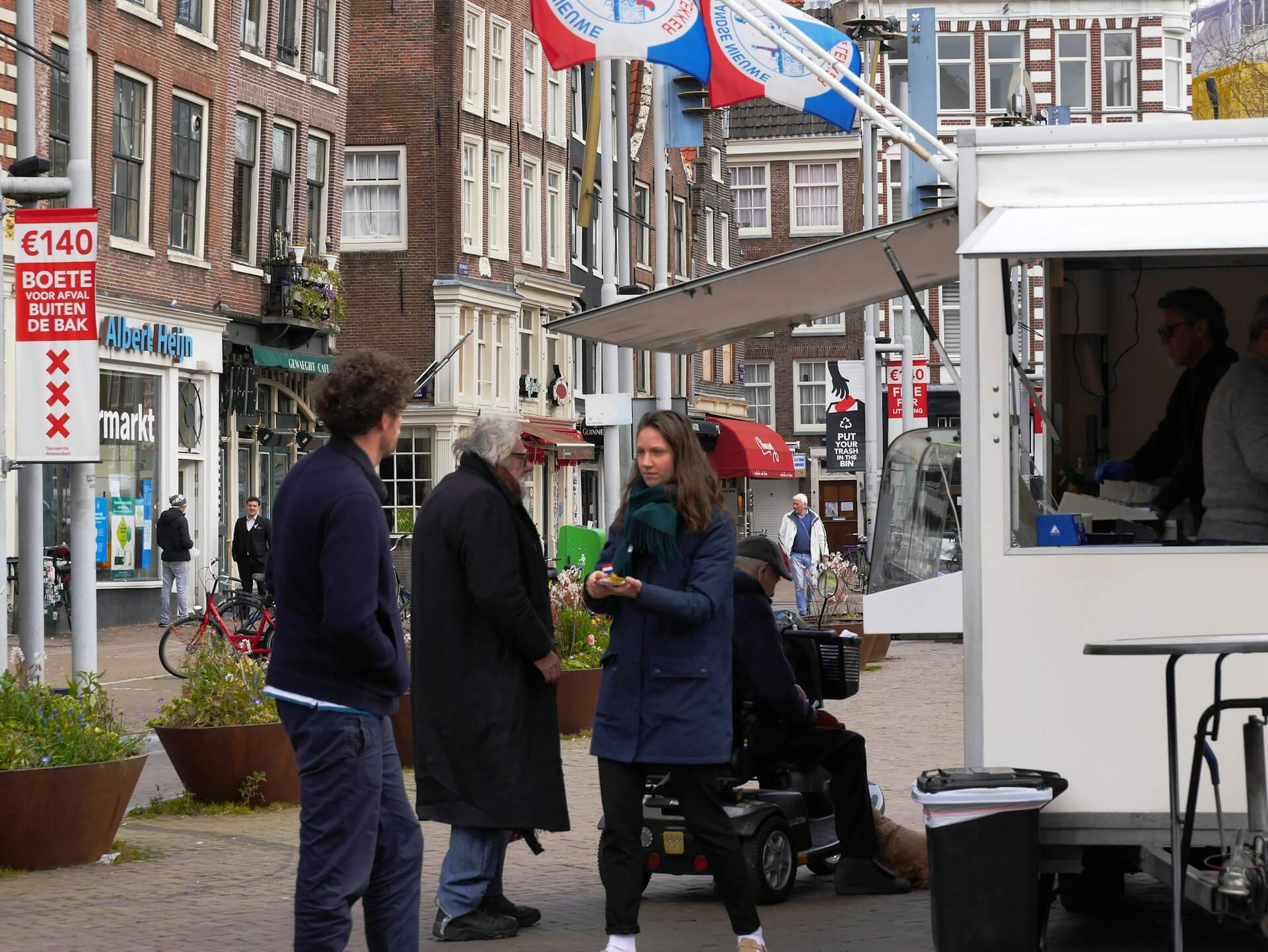
Dutch herring (in Dutch: haring or Hollandse Nieuwe) is one of those must-try Dutch delicacies. When you visit Amsterdam, you’ll see locals happily eating it at small fish stalls all over the city. The fish is young Atlantic herring that has been lightly salted and cured, so it’s soft and creamy rather than simply raw straight from the sea.
If you enjoy sashimi, smoked salmon or other seafood, there’s a good chance you’ll like Dutch herring too. The flavour is mild but still distinctly “fishy”, with a buttery texture that surprises many first-timers. It’s usually served with finely chopped onions and pickles, but you can always ask to leave them out. The person behind the counter might ask: “uitjes, zuur?” – this simply means “onions, pickles?”
Traditionally, herring is eaten by holding it by the tail (bij de staart) and lowering it into your mouth in one or two big bites – very Instagram-friendly and very Dutch. If it’s your first time, it can be more comfortable to have the fish cut into bite-sized pieces and eat it with a little fork or toothpick, or to try a broodje haring (a herring sandwich). Whatever you choose, you’re doing it right – the most important thing is to relax, have fun and enjoy this classic Amsterdam street food.

What is Dutch herring (Hollandse Nieuwe)?
Dutch herring is young Atlantic herring that’s been prepared in a traditional way. After the fish is caught, it is partially gutted using a method called “gibbing”. The gills and most of the innards are removed, but the pancreas is left in, which helps the fish gently ripen and develop its characteristic flavour. The herring is then lightly salted and left to mature for a few days in brine, often in wooden barrels.
Because of European food safety rules, the herring is also frozen for at least 24 hours at very low temperatures before it’s sold. This process makes Dutch herring safe to eat and gives it a soft, buttery texture. The result is what we call Hollandse Nieuwe (“Dutch new herring”): a mildly salty, creamy fish that many Dutch people grow up eating as a snack.
In Amsterdam, you’ll usually get your herring served:
- On a little tray, with chopped onions and sliced pickles
- Cut in pieces, with a toothpick or small fork
- In a soft white bun as a broodje haring – perfect if you’re a bit nervous about the texture
When does Dutch herring season start?
Every year, the Dutch celebrate the start of the new herring season in late spring or early summer. When the herring has built up enough fat (traditionally at least around 16% fat content), the first catch of the season is brought ashore and the “new” herring goes on sale as Hollandse Nieuwe.
The official opening of the season is marked with a big coastal celebration known as Vlaggetjesdag (“Day of the little flags”), most famously in the harbour of Scheveningen near The Hague. During this festival, the very first barrel of new herring is auctioned for charity and often raises tens of thousands of euros. After that, you’ll see flags and signs for Hollandse Nieuwe at fish stalls all over the country.
In Amsterdam, you can enjoy good herring throughout most of the year, but the classic “new herring” vibe is strongest from roughly June onwards. If you’re visiting in summer and spot a busy stall selling Hollandse Nieuwe, that’s your moment.
Our Review: should you try Dutch herring?
We’re big fans of trying local food when you travel, and Dutch herring is one of those snacks that really belongs to Amsterdam. It’s quick, affordable and you can find it almost everywhere, which makes it a fun little adventure between sightseeing stops.
If you like seafood, sushi, smoked fish or oysters, we’d say: definitely go for it. The flavour is richer and creamier than many people expect, and eating it at a buzzing stall surrounded by locals is half the fun. If you’re not usually into fish or you really dislike fishy smells, you might prefer to just take a small bite from a friend’s portion or start with a broodje haring – the bread, onions and pickles soften the experience a lot.
We see herring as a great mini-activity for:
- Curious foodies who love tasting local specialties
- Travellers on a budget – it’s usually just a few euros
- Couples and friends who want a fun challenge (“you first!”)
For very picky eaters, small kids or anyone who hates fishy flavours, there are plenty of other Dutch treats to try instead (think stroopwafels, poffertjes or bitterballen). But if you’re even a little bit adventurous, we honestly recommend ticking “Dutch herring in Amsterdam” off your list at least once.
How to eat Dutch herring like a local
There’s more than one “right” way to eat Dutch herring, but these are the most common styles you’ll see in Amsterdam:
- By the tail (bij de staart) – the classic Dutch pose. The fish is held up by the tail and you take a bite from the head end. It’s fun, a bit dramatic, and makes for great photos.
- Cut into pieces – probably the easiest option for first-timers. The vendor cuts the herring into bite-sized pieces so you can eat it with a small fork or toothpick.
- As a sandwich (broodje haring) – the herring is served in a soft bun with onions and pickles. A bit more filling and a gentler introduction if you’re unsure.
When you order, you can customise your toppings. Don’t like onions or pickles? Just say so. If the vendor asks “uitjes, zuur?” you can answer with:
- “Ja, allebei” – yes, both
- “Alleen uitjes” – only onions
- “Zonder uitjes en zuur” – without onions and pickles
Our tip: if you’re nervous, start with pieces or a broodje haring, take your time and share a portion with a friend. You can always go full “by the tail” Dutch style once you’ve got a taste for it.
Where to buy Dutch herring in Amsterdam
You’ll find Dutch herring all over Amsterdam, especially at:
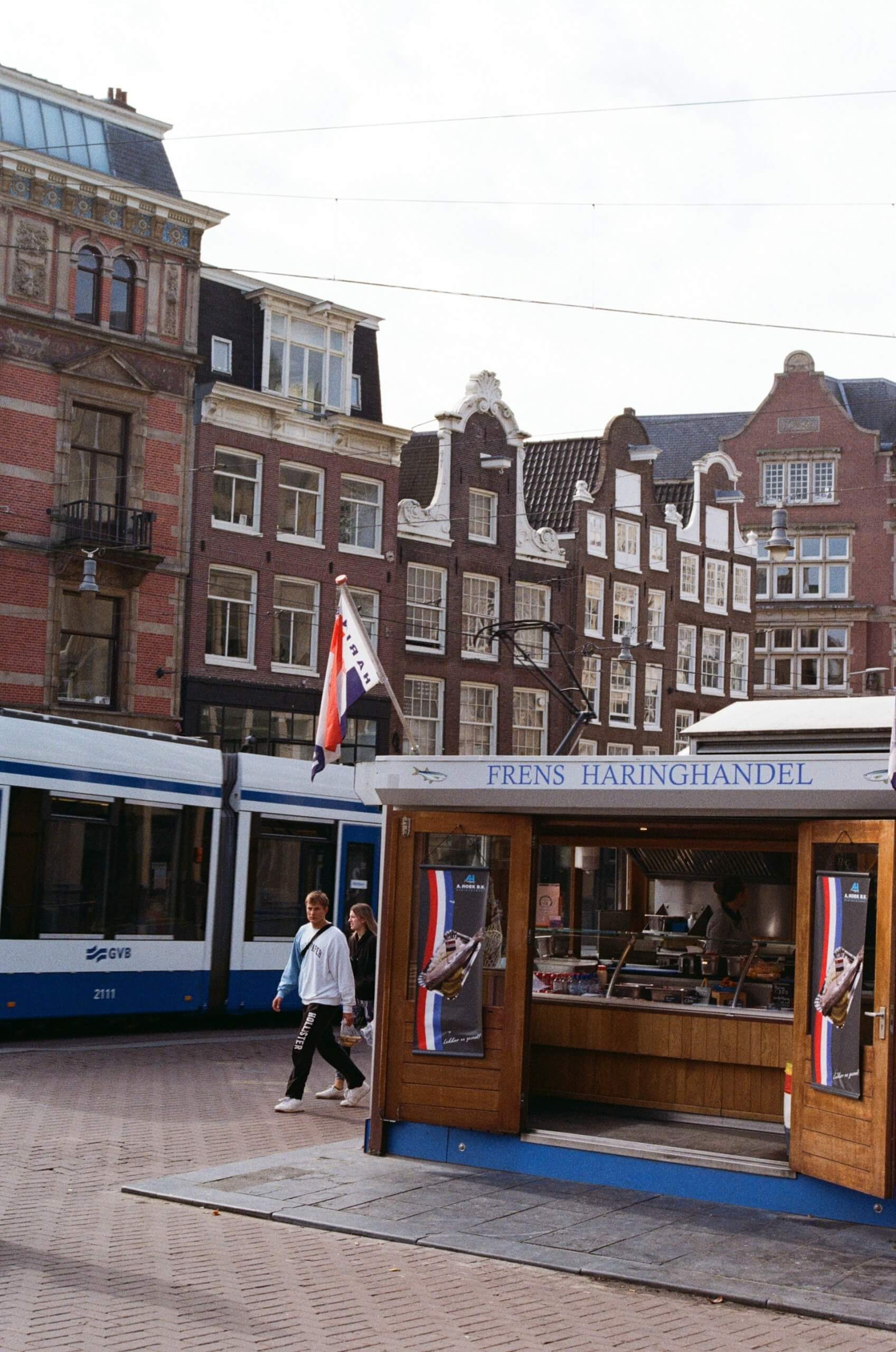
- Herring stalls (haringkarren) – small stands on squares, near markets and close to busy streets.
- Fish shops (vishandels) – permanent shops selling fresh fish, fried snacks and sandwiches.
- Markets – like the famous Albert Cuypmarkt or neighbourhood markets around the city.
We Dutchies believe herring tastes best when it’s freshly filleted and prepared right in front of you. Pre-packaged herring from a supermarket just doesn’t have the same texture and flavour. For the most authentic experience, look for a busy stall with a steady stream of local customers – that’s usually a very good sign.
A few classic spots that are often recommended by locals and guides include:
- Frens Haringhandel near the Flower Market in the city centre
- Stubbe’s Haring close to Central Station and the canals
- Vishandel Albert Cuyp on the lively Albert Cuyp Market in De Pijp
Stalls and opening hours can change over time, so think of these as examples rather than a complete list. When in doubt, simply keep an eye out for a busy herring stall while you explore the city – you’ll almost certainly walk past one.
Is Dutch herring safe to eat?
Yes – as long as you buy your herring from a reputable stall or fish shop in the Netherlands, it is considered safe to eat. The fish is not just raw from the sea: it has been cleaned, lightly salted and carefully frozen for at least 24 hours at very low temperatures to kill parasites. This process is strictly regulated under Dutch and EU food safety rules.
Of course, everyone’s situation is different. If you are pregnant, have a weakened immune system, strong allergies or other medical concerns, always follow the advice of your doctor first. We’re your local fun friend in Amsterdam, not a medical professional.
FAQ about Dutch herring
Is Dutch herring raw?
Not exactly. Dutch herring is often described as “raw”, but in reality it is cleaned, lightly salted and cured, then frozen for safety. That makes it more like sashimi or gravlax than a piece of completely raw fish.
What does Dutch herring taste like?
Good Dutch herring tastes mild, slightly salty and surprisingly creamy, with a soft texture. The onions add a sharp bite, while the pickles give a fresh sour crunch. If the fish tastes very strong, overly fishy or mushy, you probably didn’t get a great one – another reason to choose a busy, popular stall.
When is the best time to eat Dutch herring?
You can order herring all year round in Amsterdam, but the classic moment is from early summer, when the new season’s herring is available and stalls proudly advertise Hollandse Nieuwe. On a warm day by the canals, it’s pretty much the perfect salty snack.
How much does a portion of herring cost?
Prices vary a bit per stall and over time, but a portion of herring is usually comparable to the price of a simple street-food snack. Think of it as being in the same range as a takeaway coffee or a basic sandwich – a small, tasty treat that won’t break your travel budget.
Is Dutch herring suitable for children?
Some Dutch kids grow up loving herring, others want nothing to do with it (and honestly, that goes for adults too). If your child already likes fish, they might enjoy a small piece or a bite from a broodje haring. If they are very picky eaters, we’d probably start with something more familiar like fries or poffertjes.
Did you try Dutch herring in Amsterdam yet? Let us know what you thought in the comments below and whether you’d eat it again!
1 Comment
Hahahahaha that video is hilarious.